


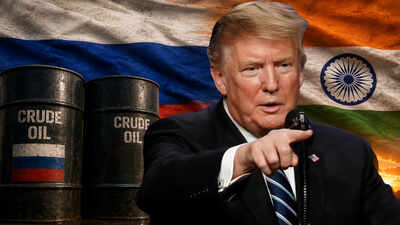
The US Senate on Friday approved a bill that could allow President Donald Trump to impose tariffs of up to 100% on goods from countries such as India and China that continue to buy Russian oil and gas and other exports, arguing that such trade helps sustain Moscow’s economy and fund its war in Ukraine.Here are 10 things to know about the legislation and what it could mean for India.What is the bill?The Senate passed the Lindsey O Graham Sanctioning Russia and Iran Act of 2026 by an 86-11 vote. Named after the late Republican Senator Lindsey Graham, one of its principal architects, the bipartisan legislation seeks to increase economic pressure on Russia and Iran and target countries that continue to conduct significant energy trade with Moscow.The bill would give the US president the authority to impose tariffs of up to 100% on goods from the world’s top five purchasers of Russian oil or natural gas, potentially including India and China.What other sanctions does the bill proposeThe bill goes beyond tariffs on Russian oil buyers. It also proposes sanctions against Russian President Vladimir Putin, senior political and military officials, financial institutions, energy projects and other entities linked to Russia’s war effort.It would also expand US sanctions to older and reflagged oil tankers that Russia allegedly uses to circumvent existing restrictions and continue generating revenue from oil exports.The wider objective is to reduce the flow of money supporting Russia’s economy and military campaign.

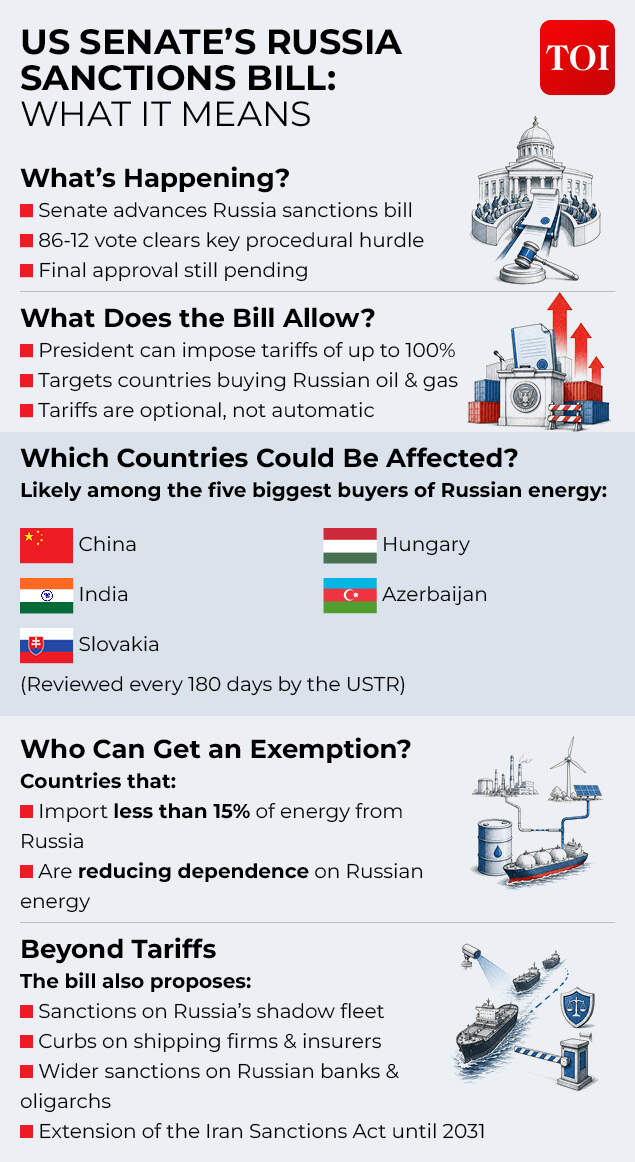
What is the US Senate Bill on Russia Sanctions?
What could India soon faceThe legislation gives the US president the authority to impose tariffs of up to 100% on goods imported from countries that are among the top five buyers of Russian oil or natural gas.India is one of the world’s biggest buyers of Russian crude, alongside China. The measure is designed to make countries choose between continuing to buy discounted Russian energy and maintaining access to the US market.Darline Graham, the late senator’s sister who was appointed to his seat, said the legislation would force countries supporting Russia’s economy to make a choice.“This bill forces those primary countries keeping Russia’s economy afloat to make a simple yet critical choice – a choice between doing business with America or buying cheap Russian energy,” she said, as quoted by PTI.Why is India in the spotlight India’s purchases of discounted Russian crude have increased significantly since the Russia-Ukraine war began in 2022. Russia was never a major oil supplier for India but after Moscow’s war with Ukraine began and Europe stopped buying Russian crude, it became available at huge discounts for India.The shift has helped Indian refiners lower crude costs and secure supplies despite disruptions in global energy markets.The reliance on Russian oil has become even more important amid disruptions to shipping through the Strait of Hormuz, which have affected energy supplies from the Middle East.New Delhi has repeatedly maintained that its energy purchases are guided by national interest, energy security and the need to ensure affordable and reliable supplies.India is already facing tariff pressureThe proposed legislation comes after Washington had already imposed additional charges over India’s purchases of Russian oil in the past. However, the earlier measures did not immediately discourage Indian refiners from buying Russian crude.With the conflict in the Middle East disrupting energy markets and creating uncertainty around supplies through the region, Russian crude remained an important source for Indian refiners. India’s imports of Russian oil rose 34% in June 2026 alone, according to the data cited in a report.What would happen if the US imposed a 100% tariffA 100% tariff would make Indian goods significantly more expensive for US importers if it were imposed broadly. The impact could be particularly significant for export-oriented sectors such as engineering goods, pharmaceuticals, chemicals, textiles and auto components.US buyers could look for alternative suppliers in other countries if Indian products become substantially more expensive.Indian exporters could consequently face weaker demand, tighter margins or the need to absorb part of the additional cost to remain competitive.The threat of such tariffs could also encourage Indian companies to diversify their export markets and increase pressure on policymakers to negotiate with Washington.Why are some US lawmakers opposing the tariff powersWhile the bill received overwhelming Senate support, some lawmakers have raised concerns about giving Trump wider authority to impose tariffs.Critics argue that tariffs could increase costs for American consumers and businesses at a time when households are already facing high living expenses.Senator Ron Wyden said, “We’ve got folks who are walking an economic tightrope here in America,” Wyden said, PBS news reported.An amendment by Republican Senator Rand Paul and Wyden seeking to remove the new tariff authority was defeated by the Senate.Senator Raphael Warnock, who had raised concerns about the tariff provisions, said he had received a written commitment from the Trump administration outlining safeguards.“We should not have to choose between putting a check on Putin’s aggression and putting a check on this president’s tariffs regime,” Warnock said. If Trump “oversteps his power, we will see him in court.”Why does the bill also target Iran?The legislation also includes measures against Iran. It seeks to extend the Iran Sanctions Act of 1996 until 2031 and maintain pressure on Iran’s energy sector.The bill therefore combines measures targeting two countries that Washington considers major geopolitical adversaries.Who can get an exemption?Countries could qualify for an exemption if they import less than 15% of Russia’s total natural gas exports and are taking steps to reduce their dependence on Russian energy.The bill also gives the US president authority to waive sanctions or restrictions if the administration determines that doing so is in the US national interest.What happens nextThe legislation now moves to the US House of Representatives, which is expected to consider it when lawmakers return later this month. The House must approve the bill before it can be sent to Trump for his signature. That means there is still a significant legislative and diplomatic process ahead before any new tariff takes effect.Also read: 100% tariffs: Why India may ignore Trump threat and continue buying Russian crude oil