


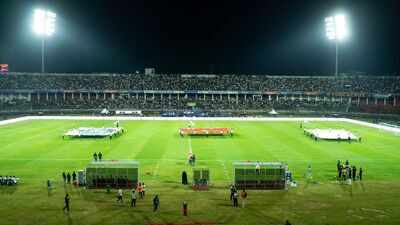
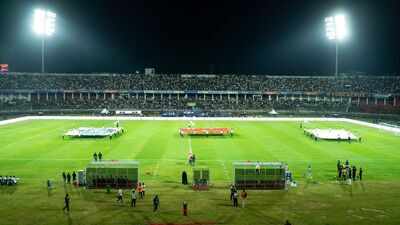
NEW DELHI: For decades, Kerala has been the heartbeat of Indian football. Floodlit local tournaments draw packed crowds, school grounds produce gifted footballers, and the sport is woven into the state’s cultural identity. Yet translating that passion into a sustainable professional football ecosystem has remained elusive.As the third season of the Super League Kerala (SLK) prepares to kick off on September 25, the league believes it has found a different path. Rather than chasing the glamour of bigger leagues or relying on broadcast windfalls, SLK is attempting to build what its CEO and Director, Mathew Joseph, calls a “360-degree sustainability” model, one where clubs, vendors, grassroots academies and fans all become stakeholders in the game’s future.Joseph is candid that Indian football’s biggest challenge isn’t attracting investors, but ensuring they stay.“Our focus from the beginning has been sustainability. It has just not been a sustainability for the league, but a 360-degree sustainability for every stakeholder,” he tells TimesofIndia.com in a virtual conversation.The “360-degree sustainability” philosophy influences almost every decision the league makes. SLK has introduced a strict salary cap, fixed player and technical staff budgets, centralised vendors to reduce operational costs, and revenue-sharing mechanisms designed to prevent financial disparity between clubs.
The entire model has been worked out in such a way that the teams, apart from the league, the next biggest stakeholder is the teams. In fact, all put together, the teams are more important than us.
Mathew Joseph | CEO & Director
Last season, the combined expenditure of the league and its teams approached Rs 90 crore, with the league itself investing around Rs 30 crore while individual clubs spent between Rs eight-10 crore. The player purse has been capped at Rs 1.75 crore (±10%), while technical staff budgets are limited to Rs 25 lakh (±10%). Teams are penalised for both overspending and underspending to maintain competitive balance.“The entire model has been worked out in such a way that the teams, apart from the league, the next biggest stakeholder is the teams. In fact, all put together, the teams are more important than us. Because if anyone drops out or if the profitability or the sustainability is affected, they will not stay back. There is a limit to which anyone can bring in money,” explained Joseph.

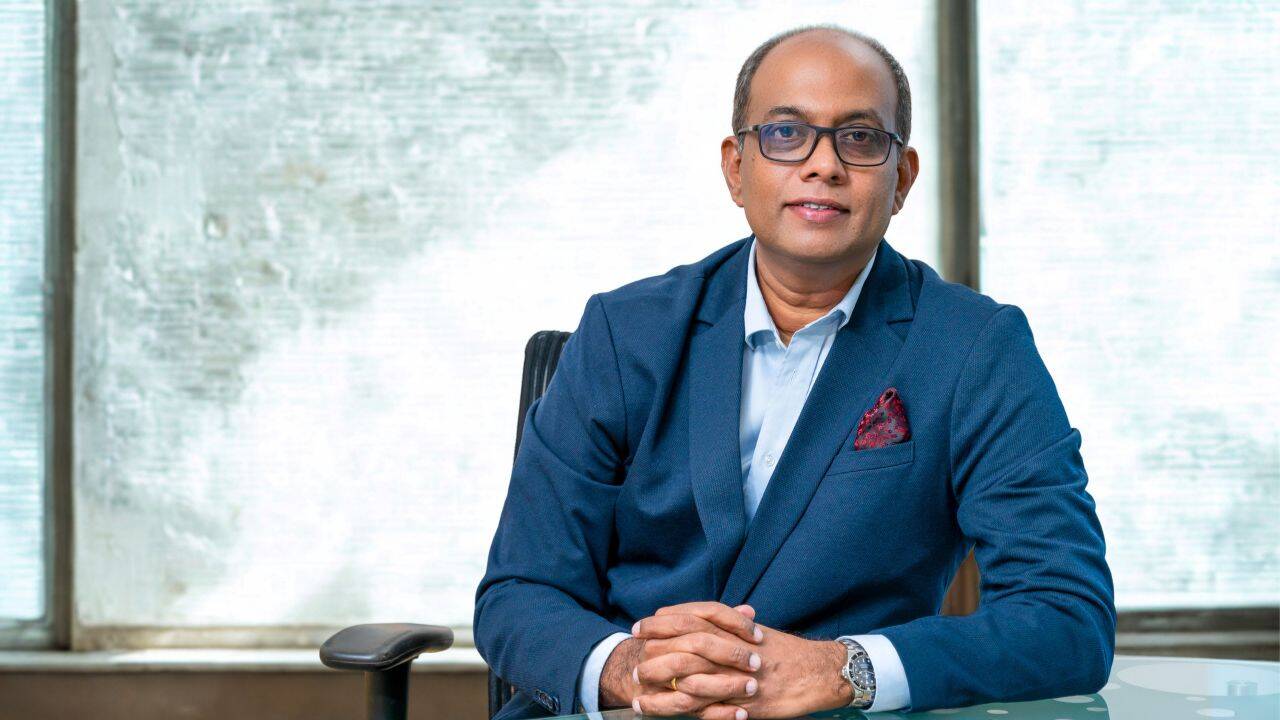
Mathew Joseph, CEO & Director of Super League Kerala. (Special Arrangement)
The economic model allows the clubs to retain 100% of their own ticketing, sponsorship, merchandise and academy revenues. Only centrally generated league income is pooled, with 40% currently distributed to clubs, while future broadcast rights would see 60% flow directly to teams.
Chasing global audience
Despite its name, Joseph insists Super League Kerala has never positioned itself as a regional league.“From day one, I was very clear that we are not just a regional league. I could have gone to a regional channel here and said that we are a regional league, can you broadcast us? We were with Star Sports, HotStar, Sony, Doordarshan, Sports.com, Etisalat in UAE and now we are with Zee5 (Unite8 Sports). This is for the nation. We are building up football in India,” said Joseph.
This year our focus has been on digital first. With Zee5 being our OTT partner, they are ready to take it across the world because most of the Indians who have smart TVs have access to Zee5. So most of the Indians and Keralaites will have access to the league.
Mathew Joseph
Given Kerala’s large population that has settled across the world, the league looks to target an audience far beyond its borders.With large Malayali communities spread across the Middle East, Europe and North America, SLK views the diaspora as an important audience. But Joseph believes quality football can also attract supporters from neighbouring southern states.His bigger bet, however, is digital consumption.“This year our focus has been on digital first. With Zee5 being our OTT partner, they are ready to take it across the world because most of the Indians who have smart TVs have access to Zee5. So most of the Indians and Keralaites will have access to the league. It should actually help us stream it better,” said Joseph.
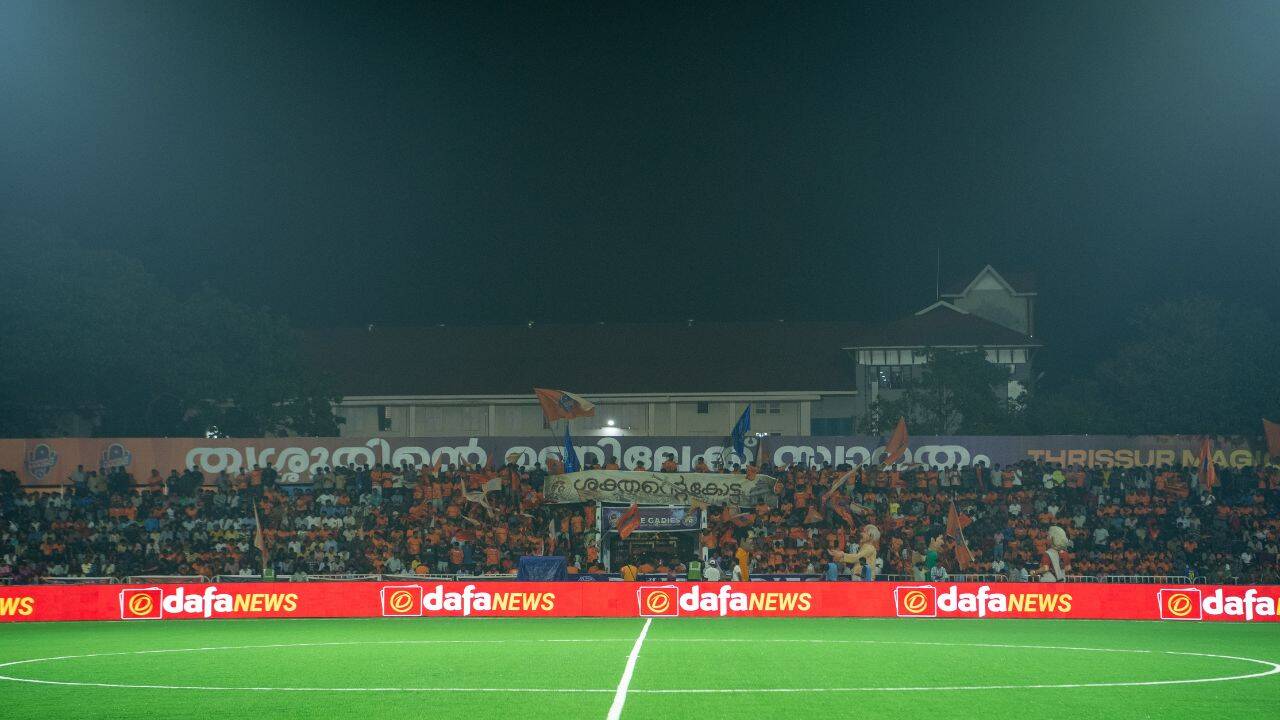
Fans enjoying one of the Super League Kerala match in Thrissur. (Special Arrangement)
Additionally, the league is looking at exploring vertical mobile broadcasts, multiple camera angles for viewers, and interactive viewing experiences tailored for smartphones, an acknowledgement that many Indian households have a single television but multiple mobile screens.
Football with a guaranteed winner
Perhaps the most visible innovation this SLK season will come on the pitch.For the first time in Indian football, every group-stage match will produce a winner. If teams finish level after 90 minutes, the match goes directly to a penalty shootout. A regulation victory earns three points, a shootout win two, a shootout loss one, and a regulation defeat none.Joseph believes eliminating draws will fundamentally change the spectator experience.
FIFA has given permissions to such things in Japan, China and a few other countries. So, we are introducing that and this is going to make it more interesting for any spectator or a person who is watching it on television.
Mathew Joseph
“We will have, definitely, a decision at the end of the match. FIFA has given permissions to such things in Japan, China and a few other countries. So, we are introducing that and this is going to make it more interesting for any spectator or a person who is watching it on television,” said Joseph.SLK has also expanded its knockout stage to include home-and-away semi-finals, increasing the season from 33 to 35 matches.
Grassroots before glamour
Long before launching the league, SLK had already invested in youth football. According to Joseph, the organisation has operated 52 academies, trained over 17,000 children, and built its own talent identification programme (Project Game Changer) in collaboration with the Andrés Iniesta Academy.
Our focus for the last six years since 2020 has been to develop a grassroots (system). We had scouts present year-round at university matches, inter-school, inter-college matches.
Mathew Joseph
This year’s scouting programme attracted around 3,500 players across six locations in Kerala, with club scouts evaluating prospects for every franchise.“Our focus for the last six years since 2020 has been to develop a grassroots (system). We had scouts present year-round at university matches, inter-school, inter-college matches. Last year, out of about 2000-odd children who came, we shortlisted close to about 15, took them into camps, and finally about five of them got selected into various Super League Kerala teams,” Joseph said.The league’s ambition isn’t merely to produce players for the top-tier Kerala Blasters.“We are not a feeder system to (Kerala) Blasters. We are a feeder system, or we would love to be a feeder system, for the entire ecosystem of football across the country. It can be another regional league, it can be a national league, it can be an I-League (now IFL) or it can be ISL, anything. As long as people play and get an opportunity elsewhere, we are more than happy,” Joseph said, presenting his vision.
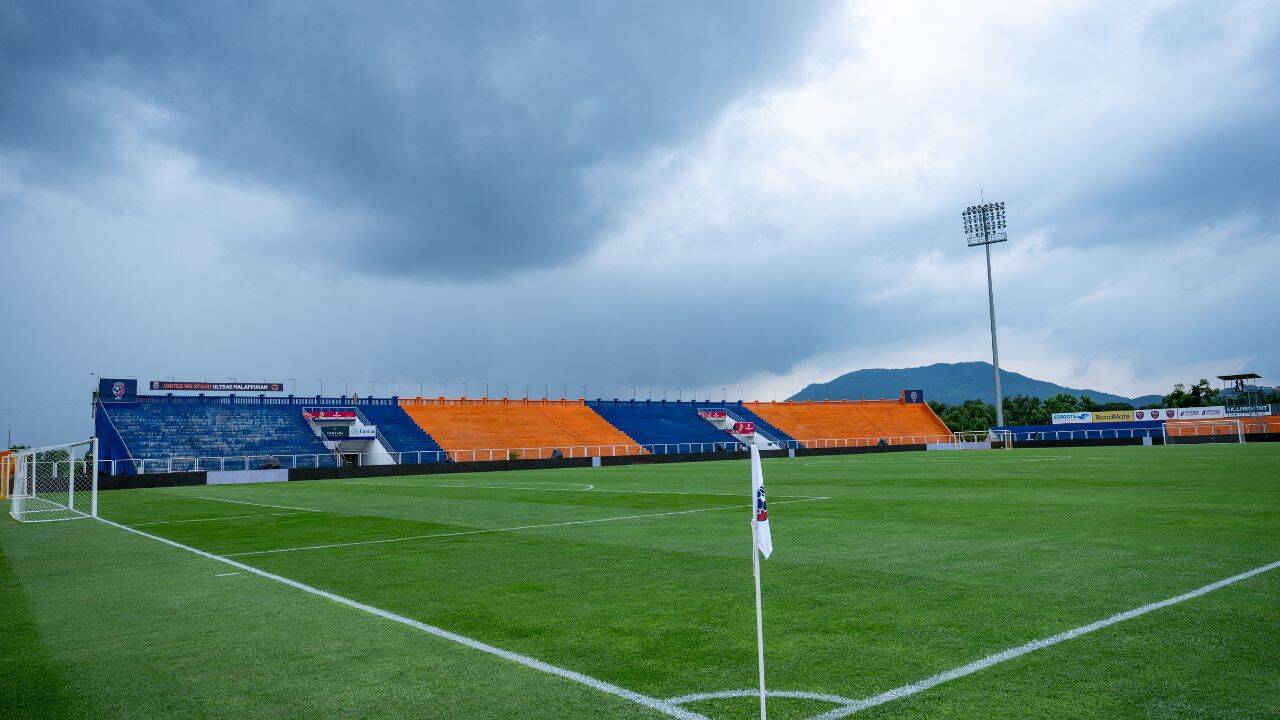
A look at the Malappuram FC home turf. (Special Arrangement)
One success story is Muhammed Sinan, who emerged through Project Game Changer before becoming one of Kannur Warriors’ standout performers and earning national recognition. He returns for season three alongside experienced Indian players such as Prasanth K, Abdul Hakku Nediyodath and Pragyan Sundar Gogoi, while overseas recruits include Varo Álvarez, Asier Gomez, Ernesten Lavsamba and Grace Adieu Youmou.
Why foreign players matter
SLK continues to mandate experienced overseas footballers and Pro Licence coaches, not simply to improve match quality but to accelerate player development.“We try to bring in players who are experienced, who have better footballing knowledge, who have played with many other leagues,” said Joseph.Joseph argues that young Indian footballers develop faster when surrounded by professionals who have competed across different football cultures.
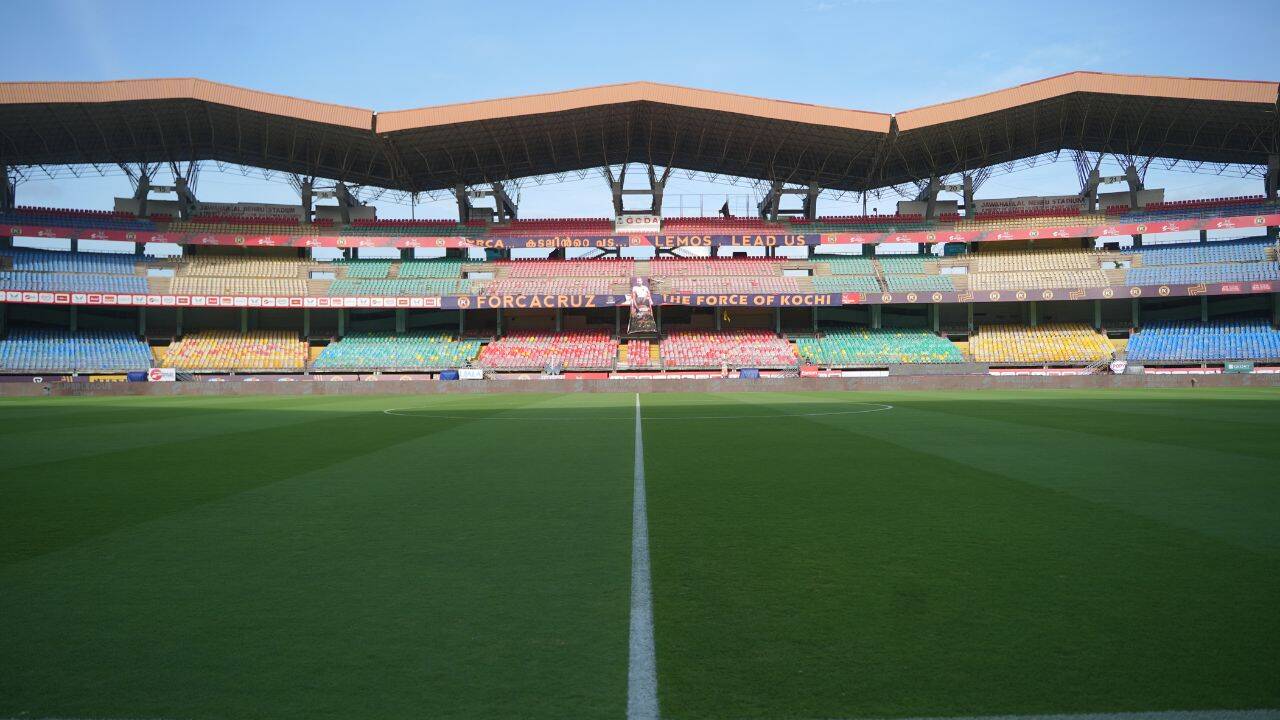
Home of Forca Kochi. (Special Arrangement)
Season three also features accomplished coaches including Karim Bencherifa (Malappuram FC), Vital Borkelmans (Forca Kochi), Andrey Chernyshov (Kannur Warriors) and Ever Adriano Demaldé (Calicut FC), giving local players access to diverse tactical philosophies.
The long game
If Indian football is waiting for broadcasters to rescue its finances, Joseph believes it’s waiting for the wrong solution. “I don’t think linear television is going to pay anymore,” he says plainly.Instead, SLK is exploring subscription models, season passes, pay-per-view products and nearly 20 separate revenue streams currently being structured alongside management and accounting firm KPMG. The objective is to create measurable fan commitment rather than speculative club valuations.
We thought we could [expand league from six to eight teams], but we realized that in the five months’ time, we will not be able to do justice to that place.
Mathew Joseph
He also sees infrastructure as the next frontier. The league deliberately postponed expansion from six to eight teams this year because stadiums in prospective cities weren’t ready.“We thought we could, but we realized that in the five months’ time, we will not be able to do justice to that place,” he reasoned.Ultimately, Joseph believes clubs must own or control their stadiums if they are to become genuinely valuable sporting institutions.For now, though, season three represents another important step rather than the finished product. Bigger audiences, fuller stadiums, improved technology and stronger grassroots pathways are the immediate targets.As Kerala prepares for another footballing autumn, the league’s ambition extends well beyond crowning another champion. It wants to prove that Indian football’s next sustainable success story can begin not in the country’s biggest cities, but in the state that has loved the game the longest.