
From Pele’s 1970 parade to Maradona’s ‘Hand of God’; How Estadio Azteca became the most iconic World Cup stadium ever | Football News
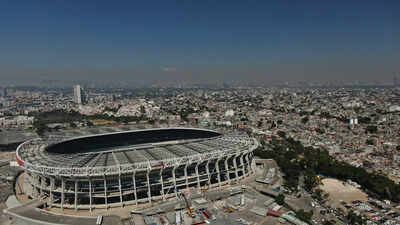
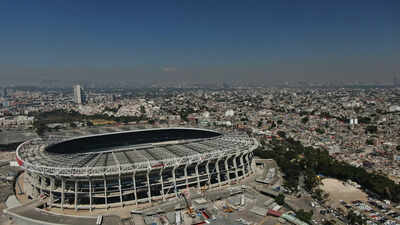
There are stadiums. There are iconic stadiums. And then there is the Estadio Azteca.When Mexico kicks off the 2026 FIFA World Cup against South Africa on Thursday, this magnificent giant in the heart of Mexico City will do what no other football stadium in the world has ever done- to host a World Cup opening match for the third time in history. In two greatest World Cup editions in 1970 and 1986 previously, and now in 2026.Often called the “Colossus of Santa Ursula,” construction of the iconic venue began in 1961 and was completed five years later, with over 107,000 fans pouring in for the inaugural match between Club America and Italy’s Torino. What followed over the next six decades was nothing short of extraordinary.
Pelé and the Golden Final of 1970
At the 1970 World Cup, as Mexico became the first country outside Europe and South America to host the tournament, the Azteca stood as the showpiece stadium. It hosted 10 matches, including one of the greatest games ever played – Italy defeating West Germany 4-3 in a breathtaking semifinal. Brazil then crushed Italy 4-1 in the final, with a young Pele parading the Jules Rimet Trophy around the pitch. “There’s just something very special about the Azteca,” the Brazilian legend had famously said. “You need to be inside it, to feel it to understand.”
Maradona ’s Divine Madness
Sixteen years later, the world came back. And it gave us Maradona.In the 1986 quarterfinal against England, Argentina’s Diego Maradona produced arguably the two most iconic moments in football history, first punching the ball into the net with his left hand in what became forever known as the “Hand of God,” then completing a mazy solo run past multiple defenders to score the ‘Goal of the Century’. Argentina went on to defeat West Germany 3-2 in the final, lifting the World Cup in Mexico City. Maradona himself never forgot it. “This stadium is the cathedral of my life in football,” he said during a visit in 2000.Now, after nearly two years of renovations that included new seating, upgraded locker rooms, improved lighting and a rebuilt pedestrian bridge, the grand old lady is ready again. The historic venue will host five matches during the 2026 World Cup, including the opening ceremony.Pele called it one of a kind. Maradona called it the cathedral of his life. A new generation of players and fans are about to find out exactly what they meant.