
Southwest Monsoon India: Weak rains could dent farm incomes, consumption and inflation outlook: S&P
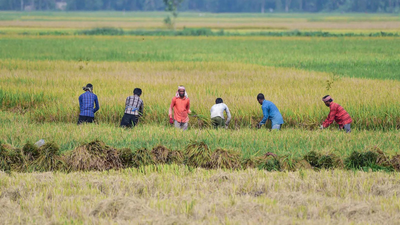
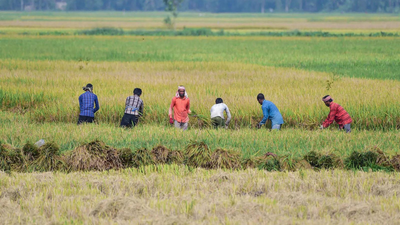
A weaker-than-normal southwest monsoon could pose risks to India’s rural economy by reducing farm incomes, increasing food inflation and slowing consumption demand in the coming months, according to a report by S&P Global Ratings.The rating agency said agriculture and related sectors such as agrochemicals, tractors, two-wheelers and microfinance are likely to face the biggest impact if rainfall remains below normal.“India’s rural economy faces a dual threat: An unusually dry southwest monsoon and higher agro-input costs driven by geopolitical conflict. The agricultural sector is the most exposed, in S&P Global Ratings’ view,” the report said.
Lower farm incomes, weaker rural demand
S&P Global Ratings said inadequate rainfall could reduce crop yields and directly affect farmers’ earnings. Lower incomes could then weaken demand for rural-focused products, including tractors, two-wheelers and other consumer goods.A weak monsoon could also push up food prices by affecting agricultural output, adding pressure on inflation, the report said.The agency warned that prolonged rainfall deficiency could weigh on rural consumption and increase pressure on government finances due to the need for additional support measures.The risks come at a time when the southwest monsoon remains crucial for India’s agriculture sector.The monsoon contributes around 70% of India’s annual rainfall and is vital for replenishing water resources in an economy where nearly half of farmland remains dependent on rainfall.
Rainfall deficit raises crop concerns
Weather conditions have already raised concerns over sowing activity in some parts of the country.Reuters reported that India received 39.8% below-average rainfall in June, while the India Meteorological Department (IMD) has forecast below-average rainfall for July.Although heavy rains along the western coast in early July reduced the overall rainfall deficit to 15.2%, weather officials warned that the deficit could widen again if dry conditions persist.SD Sanap, a scientist with the IMD, was quoted by Reuters as saying that the Madden-Julian Oscillation (MJO) is unlikely to support monsoon activity in the next fortnight, while chances of low-pressure systems developing during the period remain low.“As a result, Maharashtra, Karnataka, Telangana, Andhra Pradesh and Kerala are likely to receive below-average rainfall,” Sanap said.The delayed rains have already affected summer crop sowing. Farm ministry data showed that farmers had planted 35 million hectares under summer crops as of July 5, down 21% from the previous year.The crops affected include rice, cotton, corn and soybeans.
Financial sector faces limited but rising risks
The impact of a weak monsoon could also spill over into the financial sector, S&P Global Ratings said.The report said banks may experience slower credit growth and a modest deterioration in asset quality as rural borrowers face income pressures. However, it added that the overall impact on banks’ earnings is expected to remain limited.Microfinance institutions (MFIs), which have greater exposure to rural borrowers, are likely to face higher risks due to weaker borrower profiles.“Microfinance institutions (MFIs) are more vulnerable than banks, and we anticipate a dip in agriculture-linked asset quality. Still, there are offsetting factors. Other non-agricultural growth engines are emerging in India, and the financial system remains resilient,” said Geeta Chugh, credit analyst at S&P Global Ratings.She added that prudent lending practices and regulatory measures would help contain wider credit risks even if the monsoon underperforms.
Impact could extend beyond agriculture
S&P Global Ratings also flagged risks for India’s power sector, saying hydroelectric generation could decline by 10-15% under a weak monsoon scenario.However, the agency said India’s broader economic outlook remains supported by non-agricultural growth engines and a resilient financial system.Union agriculture minister Shivraj Singh Chouhan has advised farmers in rainfall-deficient regions to consider short-duration and low-water-intensive crops such as corn, pearl millet and green gram to reduce the impact of delayed rainfall.With nearly half of India’s workforce dependent on agriculture, the performance of the monsoon remains a key factor in determining rural incomes, food prices and overall consumption trends.