

China Trade Surplus: China hits $1 trillion trade surplus milestone for second year in a row
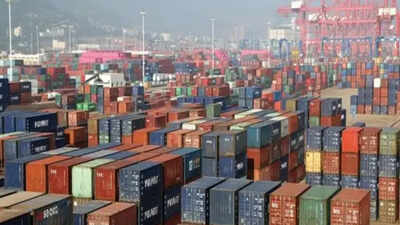
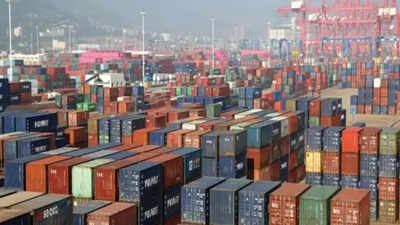
China’s trade surplus crossed $1 trillion in the first 10 months of the year, as strong global demand for high-tech products, fuelled by the race to build artificial intelligence (AI) infrastructure, helped offset weak domestic consumption.The surplus reached $1.04 trillion between January and October, according to customs data released on Tuesday.China has now recorded a trade surplus of more than $1 trillion for a second consecutive year, reaching the milestone a month earlier than in 2025.Exports rose 35.2% in October from a year earlier in US dollar terms, slightly below September’s 36.3% increase but higher than the 33.5% growth forecast by economists in a Reuters poll.Imports grew 41.6%, accelerating from 31% in September and beating the poll’s median forecast of 32%.Despite the stronger import growth, China’s trade surplus narrowed to $105.3 billion in October from $133.5 billion in September.The export performance reflects China’s growing reliance on overseas demand as subdued domestic consumption and a prolonged property market downturn weigh on its economy.The global AI investment boom has supported sales of Chinese technology products, including semiconductors and electronics, but the expanding surplus is also raising concerns among trading partners.
AI demand supports exports, but trade tensions persist
Much of China’s export growth this year has been driven by the global push to expand AI infrastructure. Analysts expect demand for Chinese technology products to remain strong into 2027, although the outlook will depend on how long the investment boom lasts.“The outlook for exports depends on how long the AI boom will last,” Macquarie analysts wrote, adding that exports could accelerate further in the fourth quarter before beginning to slow from the first quarter of 2027.Dave Chia, an economist at Moody’s Analytics, also expects Chinese exports to remain strong through the rest of the year, led by electronics and automobiles.However, the expanding surplus could intensify trade tensions, particularly with the European Union.European leaders have called for further trade restrictions on China after reaching an agreement with Beijing to limit Chinese hybrid vehicle exports to the bloc over the next few years.Since the measures have yet to take effect, manufacturers are expected to bring forward shipments, supporting exports in the near term.“The risk of additional tariffs and other trade barriers will remain elevated in 2027, particularly as Chinese manufacturers continue expanding their presence in overseas markets,” said Joe Peissel, lead macroeconomist at Trivium China.The US-China trade relationship also remains uncertain. Beijing on Monday officially announced a two-month extension of its trade truce with Washington, which was due to expire on November 10.However, China said last week that any expansion of its purchases of US agricultural goods would depend on the implementation of the agreed reciprocal tariff-reduction arrangement.China’s trade surplus with the US narrowed slightly to $32.71 billion in October from $34.01 billion in September, but the gap remains a point of friction between the two economies.Trade is expected to feature prominently in the planned meeting between US President Donald Trump and Chinese President Xi Jinping on the sidelines of the Asia-Pacific Economic Cooperation (APEC) summit in Shenzhen later this month.The two leaders are expected to meet for the third time this year.
Weak domestic demand adds to export dependence
The strong export performance comes against the backdrop of subdued consumer spending in China. A prolonged downturn in the property market has weakened household wealth and confidence, leaving domestic demand under pressure.The weakness has also pushed Chinese manufacturers to look overseas for customers. Automobile exports maintained a solid pace of growth in October, while domestic vehicle sales recorded their 12th consecutive monthly decline, according to separate industry data.AP cited analysts who said overcapacity in several industries, excess domestic savings and weak domestic demand were pushing Chinese companies to sell more goods abroad. Alicia García-Herrero, chief economist for Asia Pacific at Natixis, said the situation was not sustainable.Businesses are also facing intense competition at home. Cinders Zhou, who sells eyewear for a manufacturer in the eastern Chinese city of Linhai, told AP that competition had increasingly centred on price as products across the industry became more similar.“It comes down to product quality, or rather the increasingly the lack of it across the industry, since there’s significant homogenization,” Zhou said. “That has forced everyone to compete on price.”Greater dependence on overseas markets also leaves China’s economy more exposed to a slowdown in global demand or further trade restrictions. Analysts have warned that any correction in the AI industry could hurt exports of chips and electronics.“If the AI boom slows or turns into a correction, lower chip and electronics prices and smaller shipping volumes would hit China’s exports hard,” Chia said, according to AP.
Oil imports fall despite supply concerns
China’s oil imports fell 13.3% in October compared with a year earlier, although shipments reached their highest level since March as buyers sought supplies following disruptions to Middle East flows caused by the US-Israeli war on Iran.The trade figures come ahead of the APEC summit, where trade policy and tariffs are expected to be among the key issues in discussions between Trump and Xi. The two sides had previously proposed a $60 billion package of reciprocal tariff cuts following their September summit in Washington, including around $17 billion worth of US agricultural goods.While Chinese officials have maintained that Beijing is not seeking to expand its trade surplus and wants more balanced global trade, the latest figures underline the importance of overseas demand to the country’s export-led growth.