
Iran continues shipping millions of barrels of oil via Strait of Hormuz to China despite escalating conflict
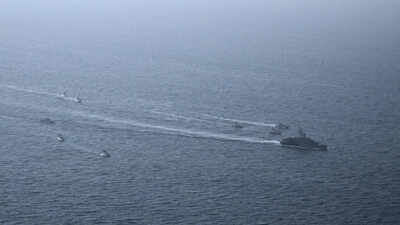
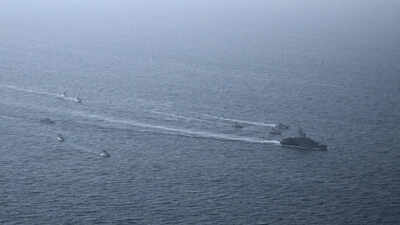
Iran shipped millions of barrels of crude oil, all to China, through the Strait of Hormuz despite escalating tensions in the region following the outbreak of the US-Israel war with Iran on February 28, which has disrupted broader maritime traffic through the key energy corridor.At least 11.7 million barrels of Iranian crude have passed through the Strait of Hormuz since the conflict began, all destined for China, Samir Madani, co-founder of TankerTrackers, told CNBC on Tuesday.TankerTrackers monitors tanker movements using satellite imagery, enabling it to track ships even when onboard tracking systems are switched off. According to Madani, several vessels have “gone dark” after Tehran warned it could attack ships attempting to move through the strait.Shipping intelligence firm Kpler estimated that roughly 12 million barrels of crude have transited the waterway since the war began, as quoted by CNBC. “Given that China has been the primary buyer of Iranian crude in recent years, a significant share of these barrels could ultimately head there,” said Nhway Khin Soe, crude analyst at Kpler. However, she added that confirming the final destinations of vessels has become increasingly difficult.Formally, Iran or China have not acknowledged any of these reportsThe Strait of Hormuz, a narrow maritime passage that handles about one-fifth of global oil and gas shipments, has seen traffic drop sharply since hostilities escalated last month, with many tankers avoiding the route amid security concerns.According to the International Maritime Organisation, ten vessels operating in or near the Strait of Hormuz were attacked by Tehran less than two weeks after the conflict began, leaving at least seven seafarers dead.Oil tankers navigating the strait “must be very careful,” a spokesperson for Iran’s Ministry of Foreign Affairs said in an interview with CNBC earlier this week.Madani also noted that three of the six tankers observed leaving Iran since Feb. 28 were flying the Iranian flag.Amid rising oil prices driven by fears of supply disruptions, US President Donald Trump urged ships waiting near the strait to resume their passage. Speaking to Fox News’ Brian Kilmeade, Trump said vessels stranded near the waterway should “show some guts” and move forward. “There’s nothing to be afraid of, they have no Navy, we sunk all their ships,” he said.Meanwhile, Iran appears to be exploring alternative export routes.The Kharg Island terminal, about 15 miles off Iran’s mainland coast, has historically handled around 90 per cent of the country’s crude exports before shipments pass through the Strait of Hormuz.However, Iran has also resumed loading tankers at the Jask oil and gas terminal on the Gulf of Oman, located south of the Strait of Hormuz.Satellite imagery captured an Iranian vessel loading 2 million barrels of crude at the facility, only the fifth such loading recorded there in the past five years, according to TankerTrackers.The renewed activity suggests Tehran is attempting to diversify its export routes beyond the Strait of Hormuz, though analysts remain uncertain about how viable the alternative is.Jask is Iran’s only crude export terminal on the Sea of Oman that bypasses the Strait of Hormuz entirely. However, it has seen limited use in the past, partly due to operational inefficiencies.Loading a single Very Large Crude Carrier, a supertanker designed for long-distance oil transport, can take up to 10 days at Jask, Madani said. “It has good domestic propaganda value, but not much in terms of a logistical advantage.”By comparison, loading a VLCC at Kharg Island typically takes just one to two days.