


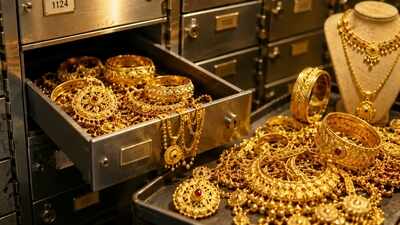
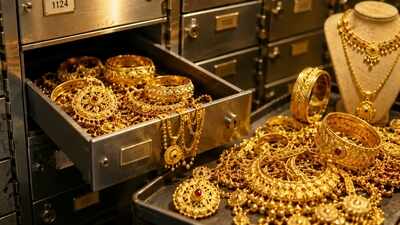
They say old is gold, and indeed old gold is turning into a golden opportunity for families in India as prices of the yellow metal rise, yielding an asset that is now increasingly being used to meet goals.Take the case of Patils (name changed): a pair of heavy gold bangles, a bridal necklace and other heirloom jewellery had been inside their bank locker in Mumbai. And, while the pieces carried memories, for the couple they had little practical value in their daily lives.Then the couple, both in their late 20s, decided to sell this inherited gold. It was an emotional choice, but they had a bigger goal in mind: buying their first home in Navi Mumbai.The gold jewellery fetched them nearly Rs 20 lakh, which helped strengthen the couple’s down payment. The decision also had an immediate financial impact. Their monthly home loan instalment fell by around Rs 20,000, leaving them with more disposable income. They now use some of that money for weekend trips to Lonavala every alternate month.And, they are not alone. The Patils are part of a wider shift among younger Indians, who are increasingly looking at inherited gold not simply as jewellery to be preserved, but as an asset that can be used to finance major life goals.
Gold jewellery value being unlocked
“Younger generations are driven by milestones. For them, old jewellery is no longer an emotional burden they feel compelled to hold on to for life,” Keyur Shah, CEO of Muthoot Exim, a gold recycling company, told ET.For some this trend means selling old ornaments to buy a home. For others, the money is being used to finance needs and goals such as higher education, a business or financial investments. Some are choosing a middle path, exchanging traditional jewellery for newer designs that fit their lifestyles better.Rajiv Popley, director of the Popley Group, says inherited gold is increasingly being recycled without the hesitation that once surrounded such decisions. At Popley outlets, old jewellery has become such an important part of the business that stores have effectively turned into scrap-buying centres, evaluating the purity of old ornaments and sending them through the recycling process.He estimates that more than 1 lakh tonnes of gold are lying idle in Indian lockers, with only a fraction having been recycled.Another young consumer in Bengaluru has taken a different route. A 25-year-old banker decided to sell her inherited jewellery after domestic gold prices surged and invest the proceeds in a diversified equity portfolio.Tannishtha Arora, a 31-year-old doctor in Delhi, sees little reason to keep jewellery locked away simply because it has been passed down through generations.“Jewellery passed down from our mothers and grandmothers is often too heavy and dated in design to be worn daily. If it’s only going to sit in a locker as an investment, it might as well be converted into gold bars or coins,” she told ET.For one Bengaluru family, the decision involved three generations. A 24-year-old, his parents and grandparents agreed to sell part of their idle gold jewellery, raising nearly Rs 80 lakh. Some of the money paid for his master’s degree in the US, while another portion became seed capital for his father’s new food processing business.
Gold price rise
Behind these individual decisions is a sharp rise in gold prices. Domestic gold prices crossed Rs 160,000 for 10 grams earlier this year before moderating in recent months. Gold prices rose 33% year-on-year in FY2025 and surged 60% in FY2026.The high prices are also changing what Indians buy. ICRA’s analysis, based on data from the Gold Council of India, shows that gold jewellery demand by volume fell 21% year-on-year in FY2026, while demand for bars and coins rose about 22%.That divergence suggests that gold is increasingly being treated as an investment rather than simply an ornament, particularly by younger consumers.Ajay Srivastava, founder of Delhi-based trade think tank GTRI, says elevated prices are encouraging households to sell or exchange old jewellery. Jewellery chains are also expanding recycling and exchange programmes, partly reducing their need for fresh gold.Yet the emotional value of gold has not disappeared. And, there is another side to the recycling boom.ICRA expects India’s domestic jewellery industry to grow around 15% in value in the current financial year, driven by high gold prices and investment demand, even as jewellery consumption by volume is expected to decline again.What is changing is what a younger generation wants it to do with idle gold. For some, the jewellery in the locker is no longer something to preserve indefinitely. It can become a house, an education, a business or an investment.For them, the real value of gold may lie not in keeping it locked away, but in unlocking it.