
Force majeure explained: Why Gulf countries are invoking it amid Iran vs US-Israel war
As the Middle East conflict between Iran, the United States and Israel intensifies, a legal term rarely discussed outside corporate boardrooms has suddenly become headline news and that is force majeure. Several Gulf energy producers, including Qatar, Bahrain and Kuwait, have invoked force majeure on oil and gas exports after attacks, shipping disruptions and infrastructure risks caused by the ongoing war.What exactly does force majeure mean? Why are countries using it now and why does it matter for global energy markets? Read on as we give you a simple breakdown of the concept and its global implications.
What “force majeure” actually means during the Iran vs US-Israel war
Force majeure is a legal clause used in contracts that allows a company or government to suspend or cancel obligations when extraordinary events make it impossible to fulfil them. The phrase comes from French and literally means “superior force.” It refers to events beyond anyone’s control, such as wars, natural disasters, government actions or major infrastructure damage. When force majeure is invoked, a company can temporarily stop deliveries or operations without being penalised for breaking a contract. In the energy sector, this usually means halting shipments of oil, gas or other commodities when conflict, attacks or logistical breakdowns make exports unsafe or impossible.
Why Gulf countries are invoking force majeure during the Iran vs US-Israel war
The latest declarations are directly tied to the regional war that erupted after US–Israeli strikes on Iran on February 28, 2026. Since then, the conflict has spilled across the Gulf, with missile strikes, drone attacks and naval tensions affecting energy infrastructure and shipping routes.Several Gulf producers have invoked force majeure because:
- Shipping routes through the
Strait of Hormuz are disrupted - Energy facilities have been targeted
- Security risks make exports unpredictable
Countries including Qatar, Bahrain and Kuwait have declared force majeure on energy shipments after these disruptions. The Strait of Hormuz is especially critical because roughly 20% of global oil and LNG shipments pass through it, making any disruption there a global economic concern.
Qatar’s gas shutdown amid Iran vs US-Israel war triggered global alarm
One of the biggest shocks came when Qatar halted natural gas production and declared force majeure on contracts with buyers after attacks on energy infrastructure early in the conflict. Qatar is the world’s second-largest exporter of liquefied natural gas (LNG), meaning disruptions to its supply immediately ripple through global energy markets. Following the shutdown, several international companies that buy Qatari gas also declared force majeure on their own deliveries to customers. This cascading effect shows how quickly supply disruptions can spread across global energy networks.
Bahrain’s refinery attack amid Iran vs US-Israel war escalated the crisis
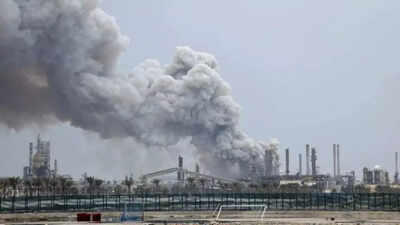
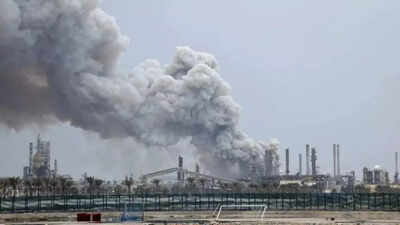
Another major trigger came when Bahrain’s state oil company declared force majeure after an Iranian strike hit its main refinery complex. The attack disrupted oil operations and made it impossible for the company to meet export commitments. Energy analysts say incidents like these highlight how vulnerable Gulf energy infrastructure can be during regional conflict. Since the Gulf region supplies a significant share of the world’s oil, even temporary disruptions can send shockwaves through markets.
The domino effect of Force majeure on global energy markets amid Iran vs US-Israel war
Force majeure declarations often create a domino effect across supply chains. When producers stop shipments, buyers scramble to find alternative suppliers, shipping schedules collapse and prices spike due to uncertainty.During the current crisis, oil prices surged past $100 per barrel amid fears of supply shortages and instability in the Gulf. Energy companies worldwide are now reassessing contracts, stockpiles and shipping routes. Some countries have even begun preparing emergency reserves in case disruptions continue.
Why the Strait of Hormuz matters in the Iran vs US-Israel war
A major reason behind the crisis is the Strait of Hormuz, one of the world’s most important maritime chokepoints. The narrow waterway connects the Persian Gulf with the Arabian Sea and is used by tankers carrying oil and gas from countries including:
- Saudi Arabia
- Qatar
- Kuwait
- the UAE
- Iraq
Since such a large share of global energy flows through this route, any threat to it can have immediate global consequences. In the current conflict, attacks and security threats around the strait have forced companies to rethink shipping routes and export schedules.
Could more countries declare force majeure amid Iran vs US-Israel war?
Energy experts warn that if the war escalates further, more producers could suspend exports. Officials in Qatar have already warned that prolonged disruptions could push other Gulf energy producers to declare force majeure as well.If that happens, the world could face a significant supply shock in oil and natural gas. Such a scenario would likely push fuel prices higher, increase inflation in importing countries, and intensify economic uncertainty worldwide.
Why this legal term, force majeure, suddenly matters globally amid Iran vs US-Israel war
Although force majeure is a legal concept usually buried deep inside contracts, the current conflict has turned it into a key factor shaping global energy markets. When countries invoke it, they are essentially acknowledging that war or extraordinary events have made normal trade impossible.For consumers, the impact may eventually show up as higher fuel prices, rising electricity costs and/or supply shortages in energy-dependent industries. The sudden surge in force majeure declarations across the Gulf highlights how quickly geopolitical crises can disrupt the global economy.What began as a regional conflict has now begun affecting energy supply chains, commodity markets and international trade. Whether the situation stabilises or spreads further will determine how long the world continues to hear this once-obscure legal term dominating global headlines.