


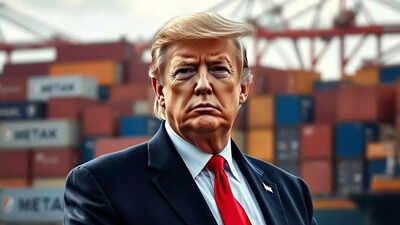
The Donald Trump administration’s move to launch investigations into the trade practices of sixteen economies, including India, sends the signal that the US trade policy is entering a new phase. On March 11, 2026, the Office of the United States Trade Representative (USTR) initiated a new series of investigations under Section 301, focusing on the trade policies and industrial practices of sixteen economies.The economies included in the investigation are China, the European Union, Singapore, Switzerland, Norway, Indonesia, Malaysia, Cambodia, Thailand, South Korea, Vietnam, Taiwan, Bangladesh, Mexico, Japan and India.The inquiry will examine a broad range of industries such as steel, aluminium, automobiles, batteries, electronics, chemicals, machinery, semiconductors and solar modules.
Trump’s Tariff Policy Dismantled
According to an analysis by Global Trade Research Initiative (GTRI), the move is important since it comes after the US Supreme Court rules that Trump’s reciprocal tariffs are illegal. The think tank has called the investigation a result of the ‘collapse’ of the US tariff strategy.“The revival of Section 301 investigations signals that US trade policy is entering a new phase following the court ruling that curtailed Washington’s tariff powers. With its earlier tariff strategy effectively dismantled, the United States appears to be turning to trade investigations and targeted measures to maintain leverage in negotiations with trading partners,” says GTRI founder Ajay Srivastava.Following the ruling, Washington moved quickly to introduce a new measure. Within hours, it imposed a 10% tariff under Section 122 of the Trade Act of 1974, shifting from targeted tariffs to a standard duty applied across all countries.This change, however, created complications for the United States. A number of countries had previously concluded trade arrangements with Washington under the earlier system of reciprocal tariffs. Those agreements involved negotiated tariff levels that were higher than the newly imposed rate. For instance, the European Union, Japan and South Korea had accepted tariffs of about 15%, while Vietnam and Taiwan had agreed to around 20%. Indonesia and Thailand had negotiated duties of roughly 19%.“After the court ruling introduced a universal 10% tariff, those negotiated advantages effectively disappeared, prompting some governments to reconsider the value of trade deals with the US,” notes GTRI.
What it means for India
Many of the economies now subject to the Section 301 investigations had already finalized some form of trade arrangement or framework with Washington after April 2025. For example, China currently operates under a temporary tariff arrangement. Meanwhile, Singapore, Switzerland, Norway, Thailand, Mexico and India are still engaged in negotiations.India, for instance, issued a joint statement with the United States on February 6, 2026. Under this understanding, New Delhi agreed to lower tariffs on a range of products, showed intent to purchase more than $500 billion worth of US goods over five years, ease certain digital regulations affecting American technology companies and reduce specific regulatory barriers facing US exports.The US probe highlights multiple sectors in India where it believes there could be structural overcapacity or export surpluses. These sectors include solar modules, petrochemicals, steel, textiles, health-related products, construction materials and automotive goods.According to the US notification, India’s manufacturing capacity for solar modules is already close to three times the level of domestic demand, which indicates the potential for production surpluses aimed at export markets. The notice also points to similar concerns regarding the rapid expansion of capacity in sectors such as petrochemicals and steel.President Donald Trump has cautioned trading partners against attempting to reopen or renegotiate these agreements.According to GTRI, Section 301 continues to be a significant instrument in US trade policy, though it operates more slowly and under tighter legal constraints compared with the reciprocal tariff system that was struck down by the Supreme Court. Investigations under Section 301 require clear evidence that specific trade practices have caused harm.Washington may also consider imposing tariffs under Section 232 of the Trade Expansion Act of 1962, which permits trade restrictions on the grounds of national security. This provision has previously been used to apply substantial duties on steel and aluminium and could potentially be extended to other sectors.
What is the investigation process?
Under Section 301 of the US Trade Act of 1974, the United States government has the authority to examine whether trade practices adopted by other countries are unfair or discriminatory and whether they adversely affect US trade.These investigations will assess whether measures such as industrial subsidies, government-backed manufacturing push, the role of state-owned enterprises, restrictions on market access, currency-related policies or weak domestic demand have contributed to excess global manufacturing capacity that places pressure on US industries.If the inquiry determines that such practices exist, the United States may respond with countermeasures. These could include the imposition of additional tariffs, limits on import volumes or other forms of trade restrictions.The investigation will proceed through a structured process. Public dockets for written comments will open on March 17, 2026, enabling businesses, industry associations and governments to submit their views. Written submissions and requests to appear at the hearings must be filed by April 15. Public hearings are scheduled to be held from May 5 to May 8 at the US International Trade Commission in Washington. Parties wishing to submit rebuttal comments will have seven days after the conclusion of the hearings to do so. Following consultations with the governments involved, the USTR will decide whether the practices being examined justify retaliatory trade measures.