




FDI was supposed to be the dependable kind of foreign money — the kind that built factories, brought technology and stayed for the long haul. FPI was the flighty cousin, quick to exit when markets turned. But India’s net FDI has now shrunk to a trickle as rising repatriation and disinvestment offset strong inflows. What changed?In the first nine months of fiscal year 2025-26, only $3 billion of net FDI came into the country. In 2024-25, that figure was $1 billion — with $81 billion inflow and $80 billion outflow.

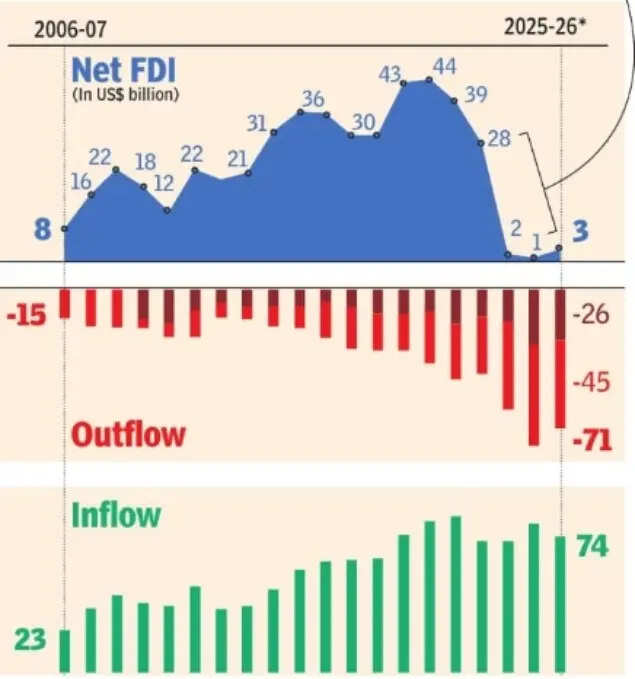
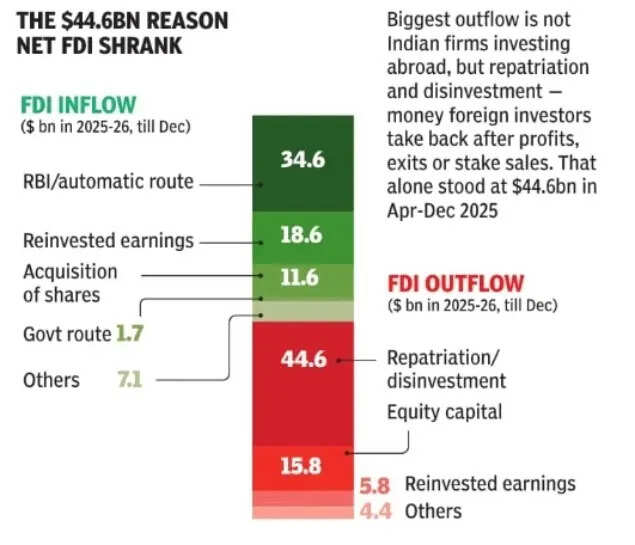
The stock market boom after 2021 led to several foreign companies listing in Indian markets. After listing, a big chunk of money raised was transferred to the home country as repatriation and disinvestment. Similar outflows happen when Indian companies invest abroad. At the same time, gross FDI inflows have not fallen and have actually risen after 2023-24.The biggest outflow is not Indian firms investing abroad, but repatriation and disinvestment — money foreign investors take back after profits, exits or stake sales. That alone stood at $44.6 billion between April and December 2025.

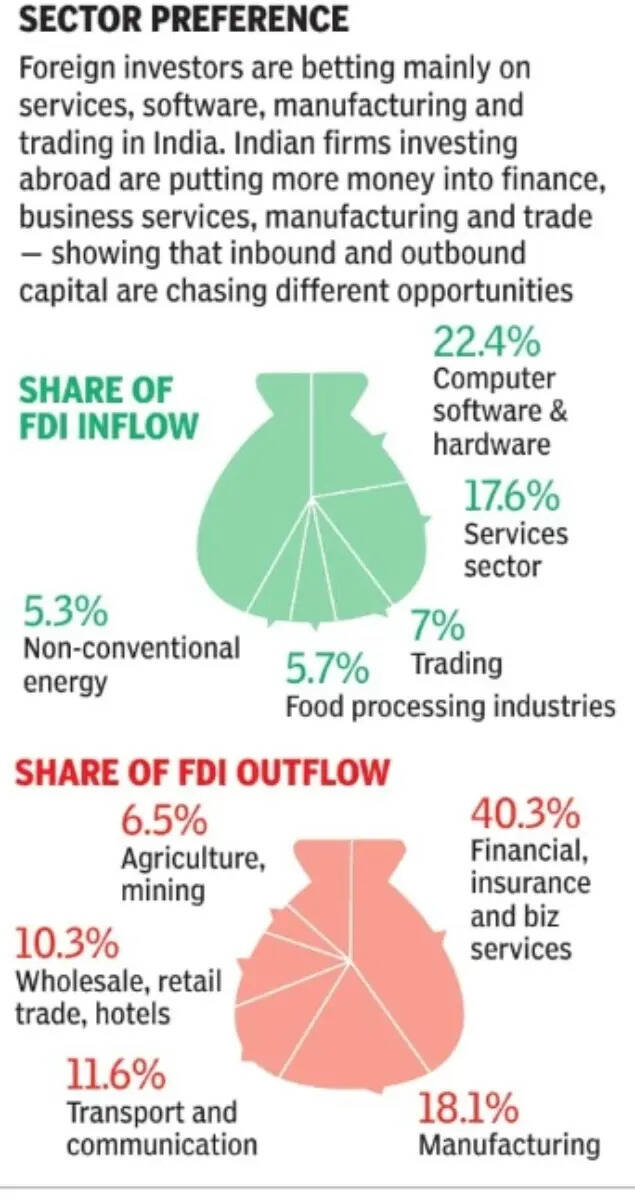
Foreign investors are betting mainly on services, software, manufacturing and trading in India. Indian firms investing abroad, meanwhile, are putting more money into finance, business services, manufacturing and trade — showing that inbound and outbound capital are chasing different opportunities.A large share of FDI continues to move through Singapore and Mauritius. These are not just source countries; they are global routing hubs used by firms for tax, treaty and corporate structuring reasons.

FDI is also not spread evenly across India. Maharashtra, Karnataka, Gujarat, Tamil Nadu and Haryana attract more than 80 per cent of inflows, reflecting stronger infrastructure, business ecosystems and investor familiarity.