


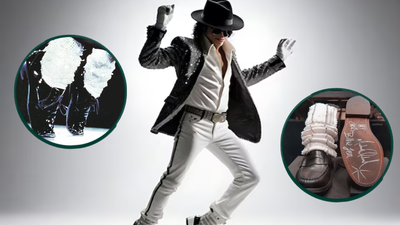
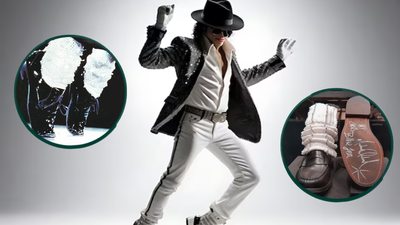
Michael Jackson had a way of making a dance move look like something the human body simply should not be able to do. One of the best examples came in ‘Smooth Criminal’, when the singer appeared to bend his body sharply forward while keeping his feet planted on the floor. For years, the move looked like a piece of stage magic. However, there was very real engineering behind it.Jackson, along with Michael L. Bush and Dennis Tompkins, was named as an inventor on a US patent that described a specially designed shoe and stage mechanism capable of producing the effect. The patent was filed in 1992 and granted the following year under the title ‘Method and Means for Creating Anti-Gravity Illusion’. The patent record lists Triumph International, Inc. as the assignee.
The patent behind Michael Jackson’s gravity-defying move
The details are laid out in U.S. Patent No. 5,255,452. According to the patent document, the invention was intended to create an “anti-gravity illusion” for entertainment. It wasn’t designed to cancel gravity or make the performer weightless. Instead, it provided an additional point of support that allowed the performer to lean much farther forward than would normally be possible.The patent describes specialised footwear that could connect to a movable hitch or post built into the stage. When the mechanism was raised, the heel of the shoe could lock onto it. This gave the performer the support needed to shift his body forward and place his centre of gravity beyond the front of his shoes.The patent’s inventors were Michael J. Jackson, Michael L. Bush and Dennis Tompkins. It was filed on June 29, 1992 and officially granted on October 26, 1993.
What was hidden underneath the heels?
The clever part of the design was inside the heel.The patent describes a recess in the heel that could receive the stage hitch. A V-shaped slot acted as a guide, allowing the heel to slide into position and engage with the protruding mechanism. Once connected, the shoe could remain firmly attached to the stage while Jackson leaned forward.The footwear was also designed to look relatively ordinary from an audience’s perspective. The patent explains that parts of the shoe could be covered with material such as a sock section, spats or trouser legs. This helped conceal the unusual construction and allowed the footwear to blend into the performer’s costume.The stage mechanism itself was designed to disappear when it wasn’t needed. According to the patent, the hitch could move between a raised position and a retracted position, allowing the performer to dance normally before and after the move.
Why couldn’t ordinary shoes do the same thing?
A normal pair of dance shoes would not have provided the necessary connection to the stage.The patented footwear contained a specially constructed heel, while the stage had corresponding hitch points that could rise through openings in the floor. The patent describes the hitch as being operated from beneath the stage, although it also discusses the possibility of remote-controlled operation.The design also addressed a problem with an earlier method of creating similar leaning effects. The patent notes that cables attached to a harness had previously been used for performers in recorded videos. However, such cables could restrict movement and required stage personnel to connect and disconnect them.The shoe-and-hitch arrangement offered a different solution. The performer could move around the stage and engage with the mechanism only when the dramatic lean was required.
Was the ‘Smooth Criminal’ lean originally performed with these shoes?
The patent itself provides useful context here. It explains that performers had already used cables and harnesses to create a similar forward-leaning effect in recorded performances. The invention was intended to make such a movement more practical for live entertainment.That distinction matters. The patent did not claim to invent gravity-defying movement itself. Instead, it described a particular mechanical system for reproducing the visual effect on stage.That is also why calling the footwear “anti-gravity shoes” can be slightly misleading. The phrase comes from the patent’s title, but the document repeatedly describes the invention as an illusion created through footwear and stage hardware.
What happened to the patent?
The patent record shows that U.S. Patent No. 5,255,452 was granted on October 26, 1993. The current Google Patents record lists its legal status as “Expired – Fee Related,” while also noting that its legal-status information is an assumption and not a legal conclusion.More than three decades after the patent was granted, the technology remains an interesting example of how entertainment and engineering can overlap. Jackson’s famous lean may have looked supernatural to the audience, but beneath his heels was a carefully designed mechanical solution.