


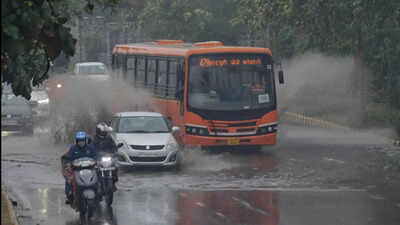
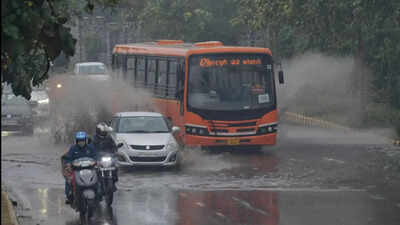


Indian workers spend an average of Rs 785 a month commuting to work, with the cost significantly higher in urban areas than in rural India, according to the country’s first National Household Travel Survey.The National Statistics Office (NSO), under the Ministry of Statistics and Programme Implementation (MoSPI), released key indicators and findings from the National Household Travel Survey (NHTS), conducted between July 2025 and June 2026, as cited by PTI.The survey recorded trips covering more than 1 km. It found that workers travelling to a fixed workplace spend an average of Rs 1,044 a month in urban areas, compared with Rs 612 in rural regions.Men also reported higher monthly commuting costs than women. Male workers spend an average of Rs 835 a month on fixed-workplace travel, against Rs 533 for female workers.About 57.6 per cent of workers travel more than 1 km to work. Overall, 54.5 per cent of rural workers and 64.1 per cent of urban workers undertake within-travel-day trips to fixed or non-fixed workplaces.Travel times vary across regions. Workers travelling to fixed workplaces take an average of 25 minutes, with the figure at 23 minutes in rural areas and 27 minutes in urban areas. Rajasthan, Gujarat and Madhya Pradesh record average travel times of around 20–23 minutes, while some parts of southern India report higher travel times. In contrast, north-eastern states, including Assam and neighbouring states, record relatively lower travel times of around 15–19 minutes.Despite the differences in commuting times, most workers reach their fixed workplace within half an hour. About 86.1 per cent of rural workers and 79.3 per cent of urban workers complete the journey within 30 minutes, while 13.7 per cent take between 30 and 60 minutes.
Two-wheelers dominate worker commutes
Two-wheelers are the most common primary mode of transport for workers, accounting for 37.1 per cent of rural commutes and 52.3 per cent of urban commutes.Public rail-based transport, including monorail, metro, suburban rail and trams, accounts for 5 per cent of urban worker commutes nationally. Its share is substantially higher in some states, including Maharashtra at 20.7 per cent, West Bengal at 16.5 per cent and Delhi at 14.4 per cent.The survey also found a gender gap in daily work travel. About 61.9 per cent of male workers undertake daily work trips covering more than 1 km, compared with 41.9 per cent of female workers.
Students spend less on daily travel
Students travelling to and from educational institutions spend an average of Rs 617 a month in urban areas, compared with Rs 361 in rural India.About 66.4 per cent of students commute more than 1 km daily. Nearly two-thirds of students aged six years and above undertake within-travel-day trips of at least 1 km to attend their basic-course educational institution, with the proportion at 65.6 per cent in rural areas and 68.1 per cent in urban areas.Students take an average of 23 minutes to travel to educational institutions — 23 minutes in rural areas and 22 minutes in urban areas. Nearly nine in 10 students complete their journey within 30 minutes, with the share at 86.6 per cent in rural India and 89.6 per cent in urban areas.Among students aged 15–29 years, regular travel to educational institutions is particularly high, with 79.1 per cent of rural students and 73.3 per cent of urban students undertaking such trips.Walking is the most common mode among school students, accounting for about 37 per cent of journeys. Buses account for 29.5 per cent, followed by bicycles at 15.8 per cent.Auto-rickshaws account for 10.5 per cent of student commutes overall, rising to 14.4 per cent in urban areas. Two-wheelers account for 6.7 per cent nationally and 11.5 per cent in urban areas.
Bus and rail dominate overnight travel
For overnight household trips, buses and railways together account for nearly three-fourths of journeys. Buses are the leading mode at 55.8 per cent, followed by inter-city railways at 17.7 per cent.Cars account for 15.1 per cent of overnight trips, while two-wheelers make up another 8.8 per cent.Rail is more widely used by urban households for overnight travel. About 22.7 per cent of urban households use rail for such journeys, compared with around 14 per cent of rural households.The NHTS is the first nationwide household travel survey undertaken by the NSO and provides data on travel patterns, expenditure, journey times and modes of transport for work, education and overnight household travel.