
Less shower time, no elevators & more: How the Middle East war is seeping into daily life worldwide
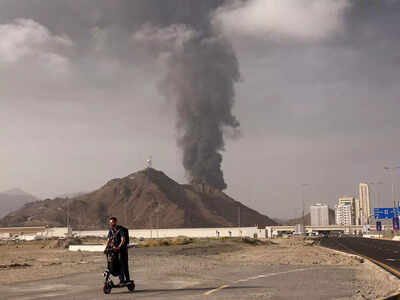
The Middle East conflict has now crossed the one-month mark, with its effects causing ripples far beyond the region and into everyday life across the globe. What began as a confrontation between Iran and Israel is increasingly disrupting global supply chains, pushing up costs, and forcing governments and individuals to adjust.The war entered a new phase on Saturday as Yemen’s Houthi rebels launched their first strike on Israel since the conflict began, opening a fresh front in a crisis that has already spread across multiple countries and unsettled trade and energy markets. As the geopolitical situation intensifies, its impact is increasingly being felt across continents: from farmers scaling back production to governments enforcing energy-saving measures, highlighting how drastically the war is reshaping daily lives, not just in the Middle East but across the globe.AustraliaAs fertiliser prices climb, farmers in Australia are forced to plant less wheat. Farmers further called on the federal government for tax relief and support in fertiliser purchases to cope with rising fuel costs, as the national cabinet prepares to consider further assistance for businesses. While details of the meeting remain undisclosed, state premiers have urged stronger national coordination. The government is not expected to support petrol rationing, with health minister Mark Butler favouring minimal intervention despite looming fuel supply concerns.Concerns have intensified as a third of the world’s fertiliser is shipped through the Strait of Hormuz, which is currently under Iran’s chokehold. In response, the United States has lifted sanctions on Venezuela to allow fertiliser exports. South KoreaSouth Korean citizens are forced to cut down bathing time, appliance usage as the country has rolled out a nationwide campaign to curb energy use, asking people to take shorter showers, opt for bicycles for short journeys, and avoid charging phones and electric vehicles at night.The push comes as concerns grow over oil and gas supply disruptions linked to the US-Israeli war on Iran. The country relies entirely on imports for its energy needs, with nearly 70% of its crude oil supply previously moving through the Strait of Hormuz, a route where tanker traffic has nearly come to a halt since the conflict began.This has intensified pressure on the economy, as surging oil prices and a weakening won against the dollar together weigh on South Korea’s energy-dependent manufacturing industries.ThailandIn Thailand, energy-saving measures are being reinforced both symbolically and practically. The prime minister has begun wearing short-sleeved shirts to work, encouraging the public to follow suit, while government offices have been told to cut back on air conditioning. Civil servants have also been instructed to use stairs instead of elevators and choose lighter attire over formal suits to help reduce overall energy use.Philippines Efforts to reduce energy consumption are being stepped up elsewhere as well. In the Philippines, civil servants have been asked to avoid using elevators, even as President Ferdinand Marcos declared a state of “national energy emergency”, warning that the Middle East war poses “an imminent danger of a critically low energy supply”.The emergency, set to last for an initial year, was announced hours after the country’s energy secretary said the Philippines would increase output from coal-fired power plants to keep electricity costs in check as the conflict disrupts gas shipments.EgyptEgypt has also moved to curb energy use, cutting shopping days to five a week as part of wider restrictions introduced amid rising fuel costs. Retail outlets, restaurants and cafes are now required to shut by 21:00 each night, alongside measures such as reduced street lighting and limits on remote working.The government has described these as “exceptional measures” to ease mounting pressure on energy supplies. Egyptian PM Mostafa Madbouly said that the country’s petrol expenditure has more than doubled in recent months. While tourism-related businesses have been exempted, the broader economy continues to feel the strain, particularly due to its reliance on imported fuel.BangladeshIn Bangladesh, cancelled flights have disrupted textile exports, causing a build-up of garments at airports. The country exports nearly $50 billion annually, with ready-made garments making up more than 80% of total shipments.The risks are especially high for Dhaka, as nearly 90% of its fuel imports come from the Middle East. At the same time, its biggest markets, the European Union and the United States, rely heavily on shipping routes that are now facing disruptions.UAE and QatarFears are mounting over delays in critical medical supplies, with cancer drugs at risk of missing delivery timelines as cargo movement slows in key hubs such as Dubai and Doha.At the same time, tightening fuel supplies are driving up the cost of everyday goods. Track suits made from petrochemicals could become more expensive, while party balloons may be harder to source as disruptions hit Qatar, which produces a third of the world’s helium as a by-product of natural gas.Bahrain and Saudi ArabiaThe conflict has also begun to disrupt global events, with Formula 1 races in Bahrain and Saudi Arabia scrapped due to missile threats targeting Gulf nations.United StatesIn the United States, rising oil prices are stoking fears of higher inflation, driving up mortgage rates and making home buying more expensive.Consumers are likely to feel the strain in multiple ways, both through domestic commerce and the interconnected nature of global trade. With supply chains stretching across regions, where raw materials are sourced in one place, manufactured in another, and then shipped to consumers, disruptions are expected to filter through to everyday goods and services.BrazilSugar prices are seeing mixed trends as Brazil’s mills adjust production. While high energy prices are pushing some towards biofuel, supply disruptions linked to the Strait of Hormuz are offering some support to sugar prices.However, prices fell on Friday due to higher production in Brazil, where mills are using more cane for sugar instead of ethanol. Data from Unica showed that 2025–26 Centre-South sugar output (October to mid-March) rose 0.7% year-on-year to 40.25 MMT, with 50.61% of cane used for sugar, up from 48.08% last year.Sri Lanka and LaosSome governments have taken more stringent steps to manage the crisis. Sri Lanka, for instance, has declared Wednesdays a public holiday to reduce commuting and conserve fuel, while Laos has moved to a three-day school week.Sri Lanka remains particularly exposed, importing around 60 per cent of its energy needs and holding reserves that last only about a month. In response, authorities have reintroduced a QR-based fuel rationing system, similar to the one used during the 2022 economic collapse. Under this system, motorbikes receive eight litres of petrol per week, three-wheelers 20 litres, cars 25 litres, buses 100 litres of diesel, and lorries 200 litres.As the conflict drags on, its effects are becoming harder to contain, cutting across borders and sectors with growing intensity. What began as a regional crisis is now steadily reshaping global trade flows, energy use, and everyday life, leaving countries to navigate a widening web of economic and logistical challenges.