


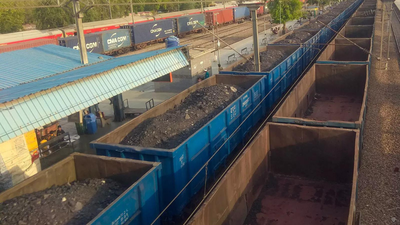
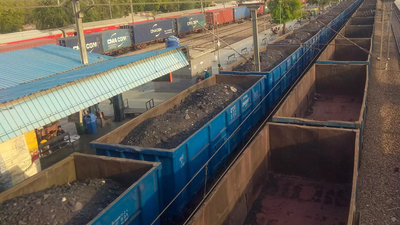
Indian Railways on Tuesday announced a series of freight and logistics reforms, including the introduction of specialised covered containers for transporting fly ash and a unified all-India licence regime for container train operators, as part of its broader plan to improve efficiency and encourage private sector participation.Announcing the reform during a press conference, Railway Minister Ashwini Vaishnaw said the initiative addresses the environmental hazards associated with fly ash generated by thermal power plants while making its transportation more viable for industries such as cement and road construction.“Fly ash is highly useful in cement production and road construction. However, if you visit any large thermal power plant, you will see massive fly ash ponds or mounds. It is a major environmental hazard. The question is how do we convert it into something usable or turn it into a positive economic activity? If we can establish an efficient transportation mechanism, we can utilise fly ash in an economically viable way, either in cement production, road construction, or other building projects,” Vaishnaw said.Explaining the need for the change, he said transporting fly ash in open wagons creates severe dust pollution during loading and transit.“During rail transportation, loading fly ash into standard wagons causes severe pollution because fly ash is extremely fine and powdery. It creates massive clouds of dust during loading. When the train travels at speeds of up to 100 km/h, a large amount of fly ash blows out of the wagons, causing environmental issues all along the transit route. That is why we have introduced this reform. We are moving away from the current system of transporting it in open wagons. Instead, we are shifting to specialised containers. We have designed special containers specifically for fly ash, which feature top-loading capabilities,” he added.According to the railway ministry, India generates around 340 million metric tonnes of fly ash every year, of which nearly 96 million metric tonnes is utilised by the cement industry. However, only 13 million metric tonnes, or about 4 per cent of total fly ash generated, is currently transported by rail. The ministry said containerised transport will reduce pollution during loading, storage and unloading while enabling easier handling using equipment such as reach stackers.As part of the reforms, the Railways also introduced a unified all-India licence regime for container train operators. Under the new framework, operators will require a single licence to operate across the country, with a uniform registration fee of Rs 25 crore for all routes. The ministry has also removed renewal fees after 20 years of successful operations.In addition, the Railways announced plans to promote containerised transportation of petroleum products, fertilisers and agricultural produce to improve handling, reduce contamination and lower logistics costs.The ministry also opened the door for industries to develop freight wagon designs based on their operational requirements. The Research Designs and Standards Organisation (RDSO) will evaluate new designs, followed by prototype testing, safety certification and approval before they are inducted into the railway network.Separately, Indian Railways tightened contractor eligibility norms for railway projects. Contractors will now have to provide an upfront performance security of 10 per cent before work begins instead of deductions being made from running bills. Contractors whose pending litigation exceeds 50 per cent of their net worth will not be eligible to bid for railway contracts. Professional indemnity insurance and all-risk insurance have also been introduced.Explaining the move, Vaishnaw said, “The more serious people will participate in the work of the railway,” adding that the reforms are intended to improve construction quality while discouraging contractors focused primarily on arbitration and litigation.The Railway Minister also announced a skill certification framework for workers engaged in critical trades such as welding, plumbing, masonry and concrete testing.“This project can be implemented across all projects in a maximum of 24 months,” Vaishnaw said, stressing the need for a skilled workforce to support India’s infrastructure expansion.The ministry also launched the Rail Bhoomi portal to streamline land acquisition for railway projects. According to the ministry, the portal is expected to reduce land acquisition timelines by 30-40 per cent, depending on the state.The announcements form part of the Railways’ broader roadmap to implement 52 reforms during the year, aimed at improving project execution, modernising freight logistics and enhancing operational efficiency.