


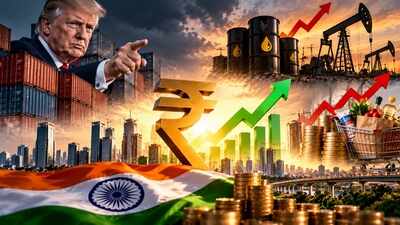
India has managed to maintain its tag of being the fastest growing major economy with its GDP growth beating estimates despite the US-Iran war posing major risks. For an economy that is dependent on the world for around 90% of its oil needs, the resilience has not been easy – but the important question now is, will it last?There are several positives in the headlines: foreign exchange reserves at record high, GDP growth beats estimates, industrial production remains robust, automobile sales across rural and urban markets point to broad-based consumption, services activity has strengthened, while electricity and fuel consumption, bank credit and investment-related production continue to show healthy growth.Yet the uneasiness stays: Foreign investors are pulling out money at a record pace, rupee has depreciated to new lows, and oil prices are back above $100 per barrel adding to inflationary pressures.

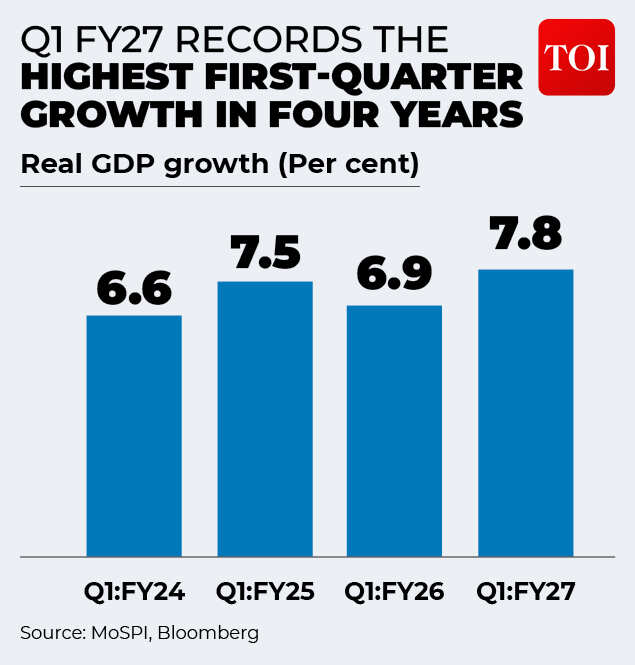
Q1 FY27 records the highest first-quarter growth in four years
The economy may have managed to sail through rough waters till now, but for how long without being hit?Perhaps the biggest indication of this uncertainty comes in the Department of Economic Affairs’ latest monthly review. The Finance Ministry, while hailing India’s economic strength is clear about one thing: India cannot afford to take its growth performance for granted.“Geopolitical and geo-economic uncertainty mean that India cannot afford to rest on its post-Covid growth laurels. It has to be earned every quarter. That is the challenge for policymakers,” it says.What are the biggest risks to the growth story? Let’s take a look:
The bad and the ugly: What are the biggest risks?
While India’s domestic growth story stays resilient, the external sector risks continue, and with mounting impact and ripple effects.As the Department of Economic Affairs notes, global conditions have turned unfavourable again. Oil prices have spiked in September. Global bond yields have moved sharply higher and continue to climb.

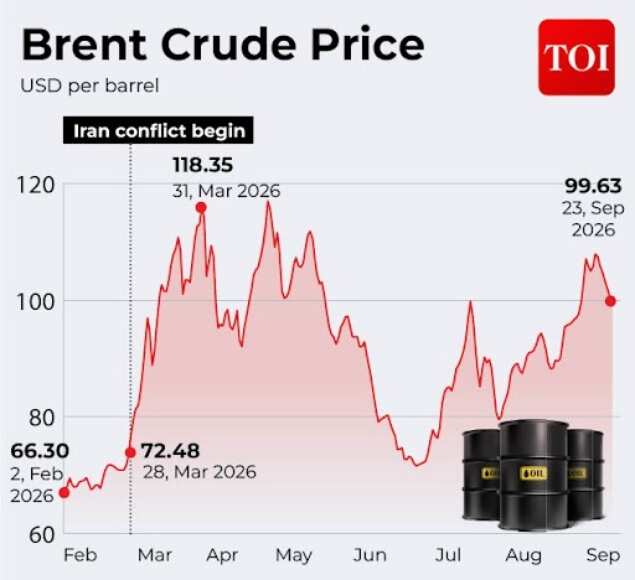
Oil prices stay high
“India’s bond yield has gone up by less but the lower risk premium pressures the Indian rupee although there is every possibility that, over the medium term, investors would appreciate the fundamental reasons behind the lower risk premium on Indian debt,” the report says.According to DK Srivastava, Chief Policy Advisor at EY India, the biggest risks are;
- Sustained increase in crude oil prices to above $100 per barrel, which would worsen inflation and the current account deficit
- Escalation of geopolitical tensions leading to supply chain disruptions and higher logistics costs
- Persistent global inflation that delays monetary easing by major central banks
- Tightening global financial conditions resulting in capital flow volatility and pressure on domestic interest rates.
“Clearly, inflation in India appears to be persistent and it is time that the RBI begins to tighten liquidity and raise the policy rate. A sustained rise in crude oil prices would increase imported inflation, widen the current account deficit and exert pressure on the rupee,” explains Srivastava.“Elevated global interest rates could trigger capital flow volatility and tighten domestic financial conditions. While these developments may not significantly derail growth, they could moderate its pace by affecting investment and consumption through higher borrowing costs and inflation. Some of the ongoing risks are likely to become even more potent going forward and India’s inflation and exchange rate are likely to remain vulnerable to global developments,” he tells TOI.In addition, a prolonged slowdown in global growth could dampen India’s merchandise exports and private investment sentiment.There are also signs of a developing fiscal risk since the government’s gross tax revenues in the first five months of 2026-27 have shown a below average growth of 6.5%.“This trend may continue since it is the rate reduction involved in the GST reforms undertaken in 2025 that is primarily responsible for the contraction in the GST revenues in the first five months. Revenue challenges may constrain the GoI in maintaining its capital expenditure growth momentum,” DK Srivastava tells TOI.Meanwhile, the government has also flagged risks from the Donald Trump administration passing a bill that allows the US President to impose up to 100% tariffs for its crude oil imports from Russia.

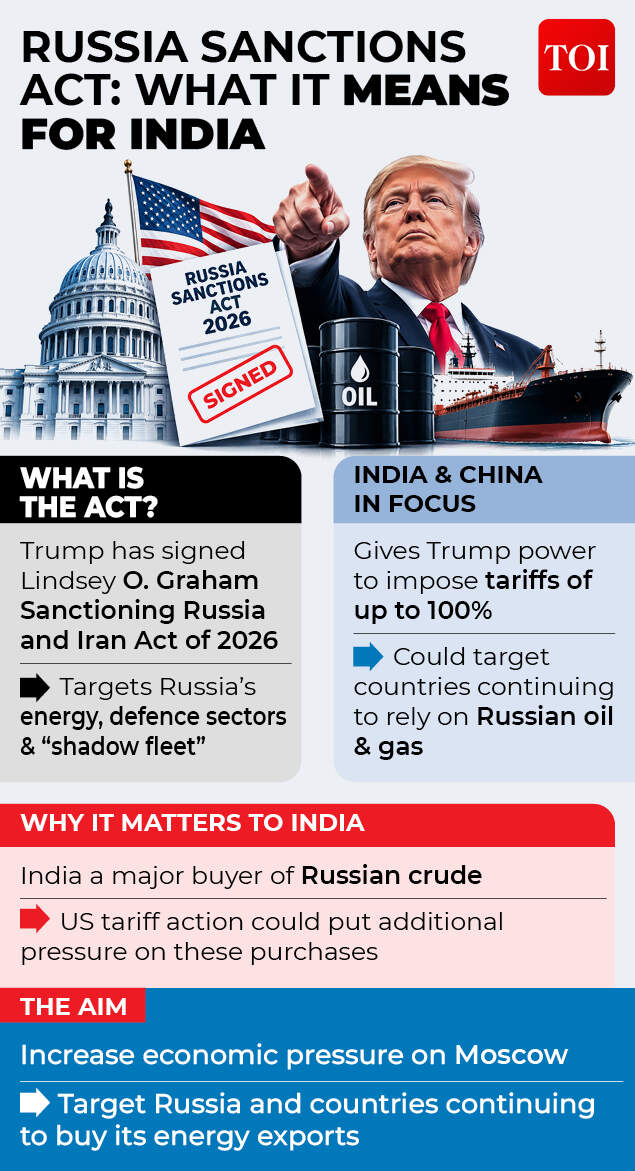
Russia Sanctions Act: What it means for India
“Trade relations with the United States remain unsettled with the passage of the Graham Bill through the Congress and its Presidential assent. It empowers the President to impose tariffs of up to 100 per cent on countries that purchase Russian crude oil,” the Ministry of Finance’s report says.Ranen Banerjee, Partner and Leader, Economic Advisory, PwC India also sees three main risks to India’s growth story: Prolonged higher crude prices, crop outputs feeding into inflation and any adverse tariff actions on Indian exports.Yet another factor is that India is not attracting as much foreign investors’ interest as earlier.

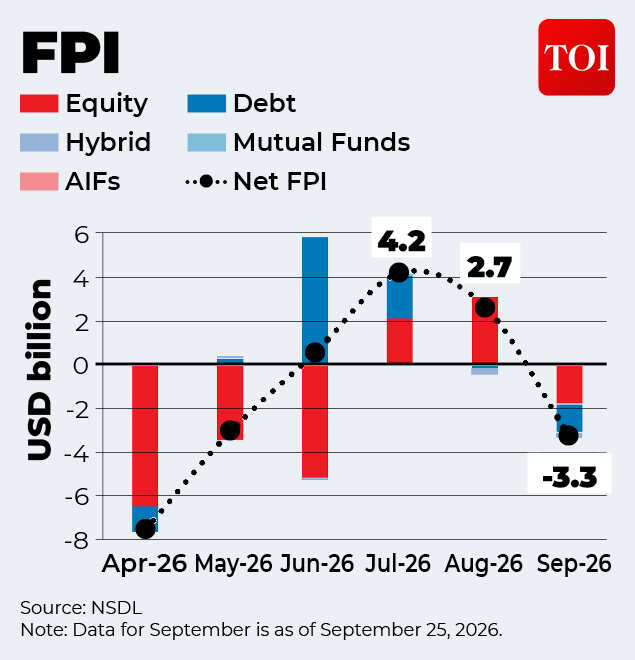
FPI Flows: The trend
According to the DEA report, the AI bubble has not begun its inevitable meaningful deflation and the AI story continues to drive capital investment and capital flows across borders.“At the same time, developed countries are also racing to secure investments to finance their renewed manufacturing aspirations amidst increasing weaponisation of global supply chains. Thus, India, as do other developing nations, faces a stiff challenge to attract capital flows,” it says.“Indications are, however, that foreign direct investment inflows, on a net basis, should do better this financial year than last. Thus, short-term pressure on Indian assets, including the currency, remains,” it adds.
What about the good?
Despite all the pressures, India’s growth story remains intact and as the Ministry of Finance says, the country entered the second quarter with a position of strength.“The recent sovereign rating upgrade underscores the strengthening of India’s economic fundamentals, with Japan Credit Rating Agency raising India’s rating from BBB+ to A- in September 2026,” the report says.Not only that, most high-frequency indicators point to continued economic activity in the early part of the second quarter. Even the monsoon conditions have been more favourable than earlier anticipated.And despite global uncertainties, India’s exports continue to grow. Merchandise exports rose 26.1% year-on-year in August, while a slower increase in merchandise imports helped bring down the merchandise trade deficit.The surplus from services exports covered 65% of the merchandise trade gap, helping reduce the overall trade deficit as well.The narrowing of both deficits points to the strength of India’s trade performance. With exports nearing $400 billion in the first five months of the year at the current pace, the full-year figure could come close to $1 trillion.“That is a very strong confirmation that India’s trade agreements are providing impetus to India’s exports. It can only get better from here, with more trade agreements on the anvil,” the DEA report says.Experts are confident that even if India’s GDP growth moderates in the coming quarters, it will still remain robust despite external headwinds.Ranen Banerjee of PwC India says the country has several natural shock absorbers that cushion global macro shocks.For example, the high refining and export of petroleum products cushions higher crude prices.“The increasing depth of domestic markets helps cushion the FII fund outflows. The higher forex reserves provide cushion to exchange rate volatility. The growing renewable energy capacity progressively cushions against higher energy import requirements,” he tells TOI.“The risk to growth is therefore cushioned but maintaining a 7%+ growth in the event crude prices remain elevated and crop production falters is going to be challenging as they will have a cascading effect on inflation as well as household consumption,” he cautions.

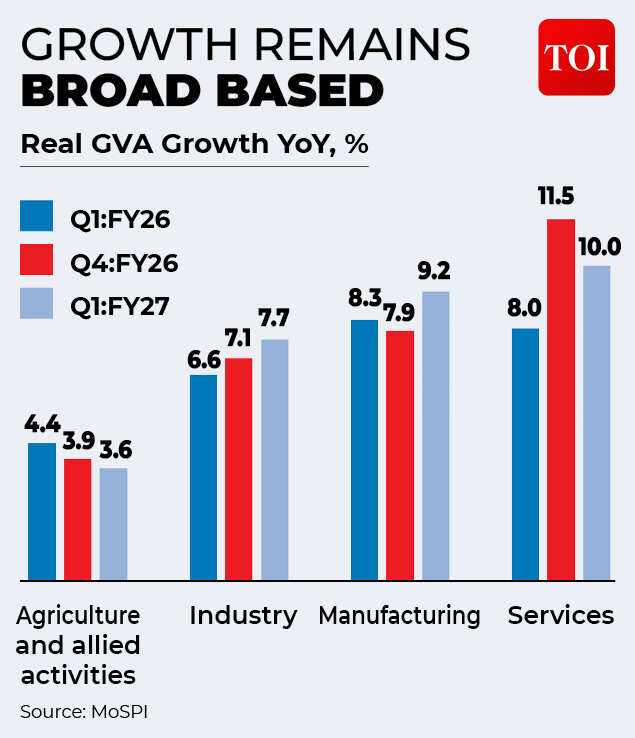
Economic Growth Remains Broad-Based
However, DK Srivastava predicts that while growth may slightly come down from its recent peak quarterly level of 7.8% in Q1 2026-27, suitable policy intervention may ensure that it remains above 7% in 2026-27 as a whole.For this purpose, the government needs to keep capital expenditure growth at 25% and above while making aggressive use of its bilateral free trade agreements so that its export growth remains healthy, he adds.He also notes that sustaining growth above 7% on a durable basis would require a broader investment-driven expansion.“Continued emphasis on public capital expenditure is important, but private corporate investment also needs to strengthen. Accelerating structural reforms that improve the ease of doing business, logistics efficiency, labour productivity and export competitiveness would help maintain India’s growth momentum,” he pitches.
The bottom line
External risks persist, with renewed geopolitical tensions and the growing weaponisation of supply chains, keeping energy prices volatile, tightening global financial conditions, and disrupting trade routes.“Sustaining growth will therefore require preserving macroeconomic stability and strengthening economic resilience,” says the Ministry of Finance.The use of supply chains as a strategic tool is becoming more pronounced, while signs of supply disruptions are emerging across a wide range of sectors, including energy, metals, electronics, food and semiconductors.

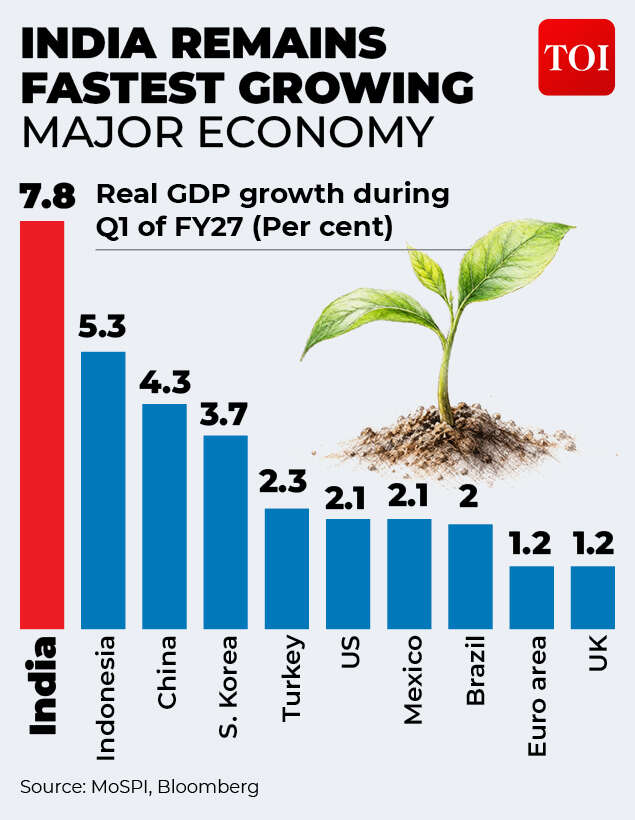
India remains the fastest growing major economy
Such supply-side shocks can also fuel inflation, which in turn can weigh on economic growth. Interest rates in developed economies are rising sharply, and this is likely to have an impact on domestic bond yields as well.Higher global interest rates could also slow cross-border capital flows, as investors may prefer to retain their money in domestic markets when uncertainty around the global economy is widespread and increasing.Maintaining a sustained record of high-quality, consistent and reasonably fast decision-making will help strengthen investor confidence.“More importantly, India must work on ensuring that the economy is more competition-friendly rather than business-friendly. Only a competitive economy will become a successful, innovative, and manufacturing economy. Improved governance and enhanced state capacity at all levels of the government hold the key to a competitive Indian economy,” the Ministry of Finance report concludes.