Chess: Father quit Singapore job, pawned jewellery to fund chess dream: Olympiad-bound Savitha Shri’s story | Chess News
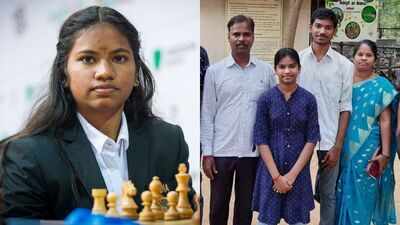
NEW DELHI: The last time the Indian women’s team took part in the biennial Chess Olympiad, they won gold. The team consisted of Harika Dronavalli, Rameshbabu Vaishali, Divya Deshmukh, Vantika Agrawal, and Tania Sachdev. Two years have passed since that Budapest conquest, and India has now named its men’s and women’s squads for the 2026 edition in Samarkand, Uzbekistan. The name missing from the list took almost everyone by surprise. It was Harika Dronavalli.Confirming her decision to skip this year’s Olympiad, Harika conveyed to TimesofIndia.com that she had already achieved what she wanted from the team event, a gold medal, and that her focus going forward would shift to individual tournaments.Meanwhile, her place has gone to someone 15 years younger than her. It is Savitha Shri, now 19, from Chennai.“She’s so happy to participate. Her main ambition is to participate in the event,” her father, Baskar, told TimesofIndia.com during an exclusive interaction. “She already participated for the Indian team at the Asian Games before.”That’s indeed true. Savitha was part of the silver medal-winning women’s team alongside Koneru Humpy, Harika, Vaishali, and Vantika at the 2022 Asian Games in Hangzhou. Reigniting those memories of the past, the 18-year-old, now with a more mature mind, will be replacing one of its most decorated names this September.
It started with her brother, Mugesh
Chess didn’t arrive in the Baskar household through Savitha but through her older brother, Mugesh, five years her senior, whom their father originally set out to build a chess career around.“We encouraged our son to play chess first,” Baskar said. “For some years he was on that journey, state level, then national level.”Savitha’s introduction to the game happened as soon as he started sitting nearby, watching her brother play. “My Savitha was monitoring her brother, how he was playing, everything,” her father added. “The interest came to her automatically. She wanted to play chess too.”
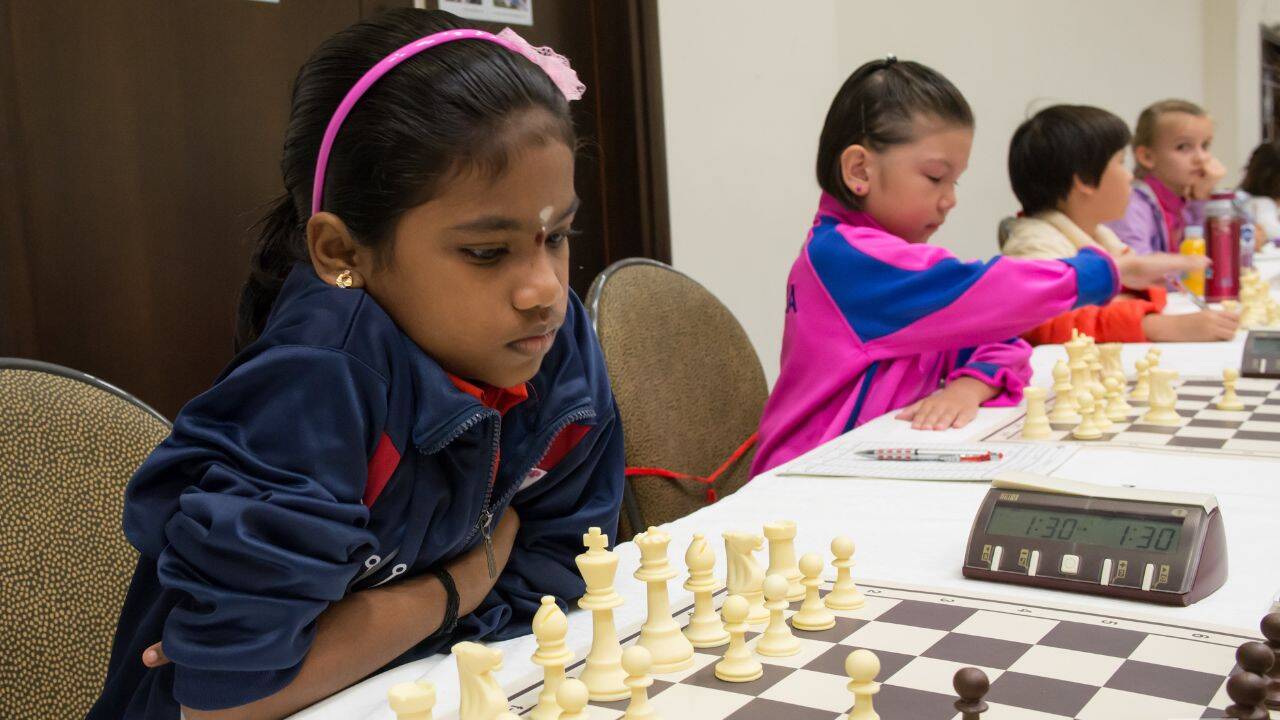
Savitha Shri at younger age (Special Arrangements)
By the time Savitha turned six, both children were training under RB Ramesh, one of India’s most respected chess minds, and his wife, Aarthie Ramaswamy, sometimes through free group coaching sessions the couple ran. But given that chess is an expensive sport, a family can only stretch so far, financially or otherwise, and a decision eventually had to be made.“We couldn’t manage two chess careers; I couldn’t take the risk of splitting our support,” Baskar said. “Savitha was also playing well, so I chose to help her continue her journey.”Mugesh stepped back from competitive chess after the eighth standard. He has since finished university and started working. In the field of 64 squares, Savitha kept going.
Quitting a job in Singapore, and what came after
As Savitha’s chess journey began to find its wings, it was then that Baskar, who had been working as an electrician in Singapore, chose to give it up entirely and return to India to support his daughter’s chess career.“Taking that decision was very difficult,” he said. He’d hoped the transition back would be smoother than it turned out to be. “After I came back to India, I found it very difficult to manage the family and support her sporting career at the same time. I faced many, many issues.”Some of those issues were straightforwardly financial. To fund a national tournament’s entry fee at one point, the family had no choice but to pawn Baskar’s gold jewellery.
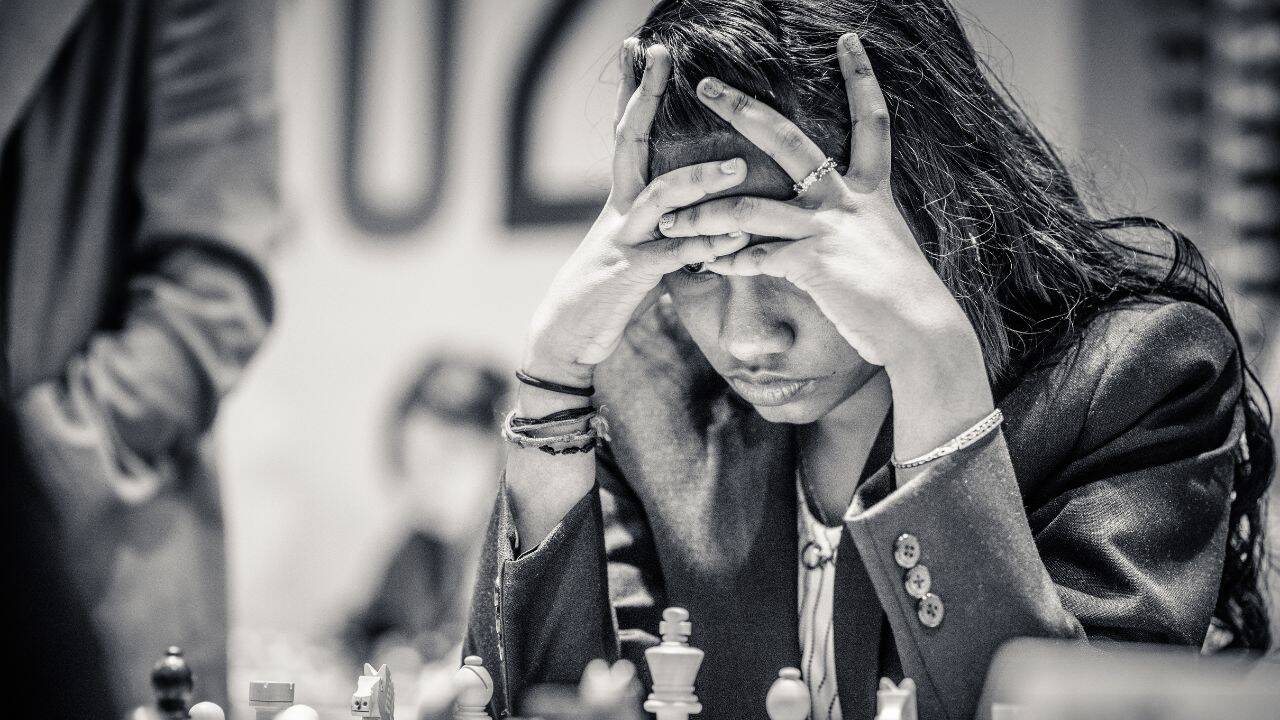
Savitha Shri (Photo by Michal Walusza)
Even wider family support wasn’t guaranteed early on. “In Savitha’s childhood, our own family members, our brothers and sisters, weren’t encouraging us to continue with chess,” Baskar admitted, pointing to how much the sport was costing a middle-class household to sustain.It is part of why Baskar, who once represented Tamil Nadu in first-division cricket himself, steered both his children toward chess rather than the sport he knew personally.“Cricket is teamwork; it’s very difficult to shine without a lot of outside support,” he said. “Chess is fully about a player’s own talent.”A bigger test came around 2022–23, when Savitha qualified for the World Rapid Chess Championship in Kazakhstan, a trip the family needed roughly three lakh rupees to make, money they didn’t have.It was Savitha’s school, Velammal, stepping in through its correspondent, that ultimately funded the trip. She repaid that faith by winning bronze, the youngest player in the field to medal.Sponsorship has followed its own uneven arc. A company backed Savitha’s travel through 2023 and into 2024, before the support abruptly stopped. “I don’t know why they stopped it suddenly,” Baskar said. The two years that followed, through March 2026, were financially difficult, with fewer tournaments and performances that suffered as a result.Relief arrived only this April, when Savitha qualified for a Tamil Nadu government financial support scheme based on her results. “That’s the only sponsorship we have right now,” Baskar said. “That’s what we’re managing with.”
What comes next
On where it all leads, Baskar doesn’t hedge.“I would like to see her become a professional chess player,” he said. “We cannot stop it now.”
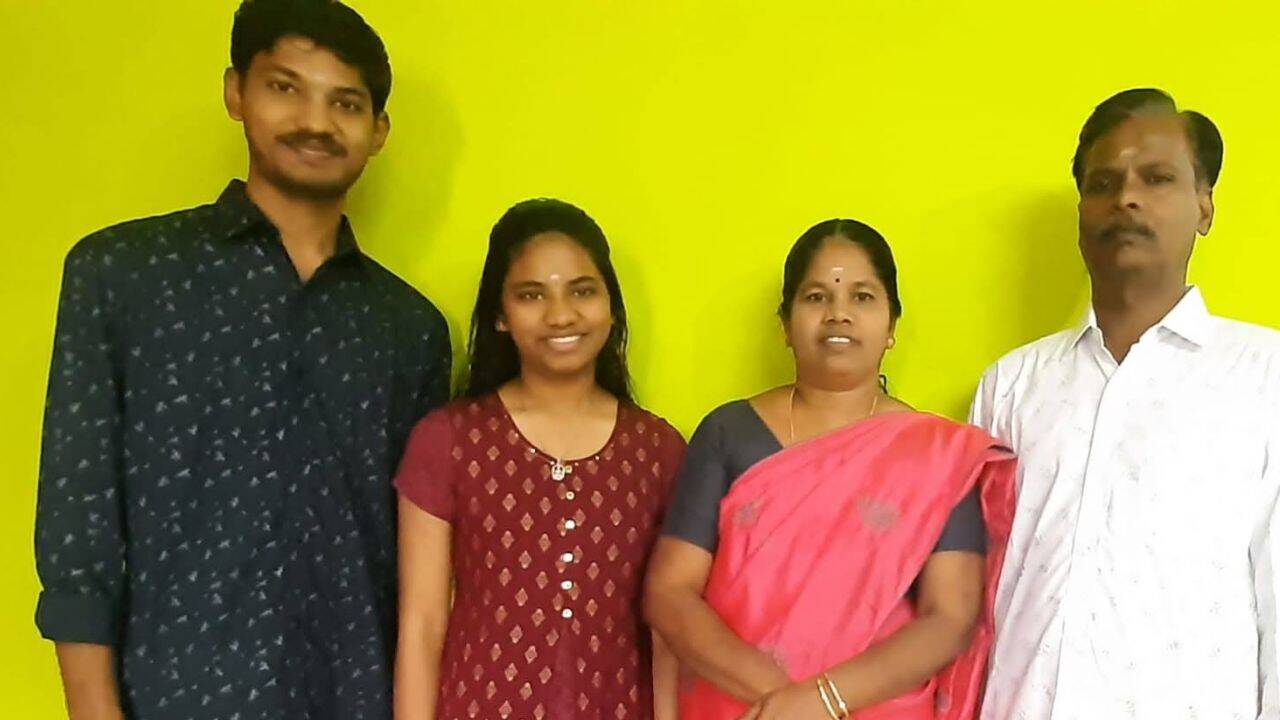
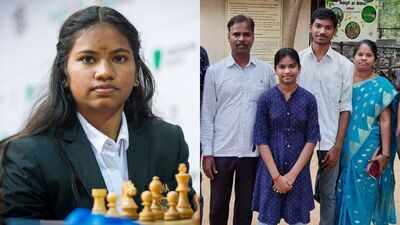
Savitha Shri with brother Mugesh, mother Sarala, and father Baskar (Special Arrangements)
It is a family of six, the two siblings, their parents, and grandparents, under one roof, held together by a cricketer father’s decision to bet everything on a daughter who first fell in love with the game by watching her brother play it.Whatever happens in Samarkand, we will be watching Savitha Shri Baskar. The world will be watching her too.