
India-US trade talks hit ‘plateau’: Sitharaman says further give-and-take ‘very, very difficult’
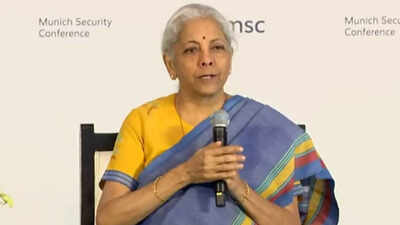
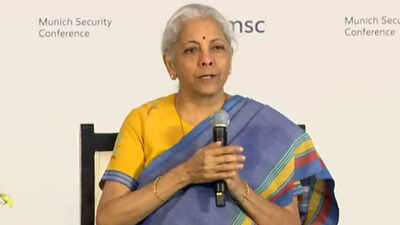
India and US have reached a “plateau” in negotiations over their bilateral trade agreement, with further concessions from either side likely to be “very very difficult”, finance minister Nirmala Sitharaman said on Monday. Speaking at the Munich Leaders Meeting in New Delhi, she said that while negotiations are still underway, any progress from here would depend on whether there was limited room for compromise on either side.“The agreement negotiations are still ongoing, although we’d like to believe that both the sides have reached a plateau beyond which giving or taking might be very, very difficult. But maybe if there are rooms to operate from, both sides would do it,” Sitharaman said.She said the agreement was still being “hard and very rigorously negotiated” and that India has a trade surplus with the US. “But what is the predominant feature of the trade relations between India and the US? The trade balance is very much in our favor.”Sitharaman said that the US would naturally want to reduce this trade imbalance and address what it sees as losses built up over the years.She also said that the way countries negotiate trade deals was changing, with governments now looking beyond traditional negotiations to address trade imbalances.“Negotiation used to be the only platform through which countries could highlight the discrepancies, highlight the lop-sidedness and say, would we want to correct this?” she said.“Tariff was an instrument of negotiation, and tariff had a certain framework within which you will apply it. Today framework is there, tariffs are going,” she said, while stressing that countries still need to negotiate and find “some give and take”.
India stresses strategic autonomy in trade negotiations
Sitharaman was also asked about maintaining strategic autonomy while negotiating bilateral trade agreements with European countries, including in the context of India procuring Russian oil.“There is no Lindsay Graham Bill in Europe…,” she said.On the broader question of how bilateral trade agreements can protect a country’s interests in an era of multilateralism, Sitharaman said countries were increasingly choosing bilateral partnerships where they saw greater benefit.“Countries choose where multilateralism would benefit them, and there are some unique bilaterals which countries choose to have. The balance is somewhat tilted in favour of the bilateral rather than the multilateral,” she said.She said countries were now increasingly looking for new trade partners and strengthening those relationships through agreements.“Countries are now rapidly catching up with — I would put the EU-India also in a bilateral mode -because it’s one in the name of union, but of course within them they have. So, bilaterals today are catching up far more than even initiating or beginning a multilateral. It’s not deliberate, but in a way, if you don’t do it, you’re not moving forward. Countries will have to choose new partners for their trade and strengthen the tie through an agreement. And therefore, newer partnerships are being searched for, and they are tied up bilaterally.”
India-EU pact opens market access
FM Sitharaman cited the India-EU trade agreement as a major example of India’s approach to negotiating trade pacts while protecting domestic interests.She said India had opened 92.5 per cent of its tariff lines and around 97 per cent of tariff value under the agreement. The EU, meanwhile, had opened 99 per cent in value terms and possibly 97 per cent of tariff lines.According to Sitharaman, greater access to the European market could support employment in labour-intensive sectors, including footwear, textiles, toys and processed products. Many of these sectors are linked to micro and small enterprises.“Those are all in the micro and small medium industry segment, which are labor-intensive,” Sitharaman said, adding that greater access to the European market could generate “more exports, more jobs”.Sitharaman said bilateral trade agreements were becoming increasingly important as multilateral institutions have weakened.“Multilateralism is not going to go away. But multilateralism has weakened,” she said.She also stressed that multilateralism should continue even as countries increasingly pursue bilateral agreements.“Multilateralism is not going to go away and multilateralism shouldn’t go away,” Sitharaman said.The Munich Leaders Meeting, being held in the National Capital, provides a platform for about 100 senior decision-makers and experts to discuss opportunities for stronger cooperation among emerging and middle powers amid profound geopolitical change. Discussions include geoeconomic developments, trade and connectivity, maritime security, defence cooperation and other key international challenges.