
Kamal Amrohi charged Rs 10,000 per scene as a writer for ‘Mughal-E-Azam’, went on to earn Rs 2 lakh for the film, reveals his son, opens up on fall-out with K Asif |
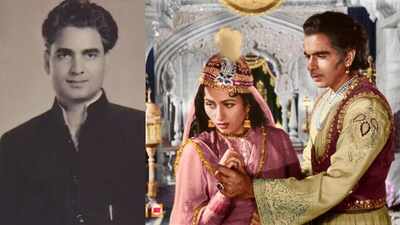
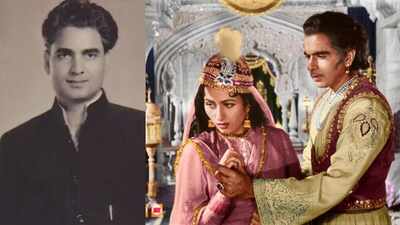
Mughal-E-Azam remains one of the most celebrated films in Indian cinema, renowned for its spectacular scale, lavish sets and memorable dialogues. Directed by K Asif, the period epic was also among the costliest Indian productions of its era, reportedly made on a budget of around Rs 1.5 crore. Adjusted for inflation, that would amount to well over Rs 150 crore today.Yet, decades after its release, questions surrounding the film’s writing credits continue to draw attention. Tajdar Amrohi, son of filmmaker and writer Kamal Amrohi, has claimed that his father played a far greater role in shaping the film’s dialogues than the official credits suggest.Tajdar said Kamal Amrohi wrote the dialogues for virtually every film he worked on, including Pakeezah, Mahal and Razia Sultan. He maintained that Mughal-E-Azam was no exception.“Every dialogue in Pakeezah was written by my father. Nobody else could write dialogues in my father’s movies. Be it Pakeezah, Mahal, Razia Sultan… even the dialogues in Mughal-E-Azam. With all due respect to K Asif, he didn’t want Kamal Amrohi to get full credit,” said Tajdar in an interview with Vickey Lalwani.Asked why Asif allegedly chose to share the writing credit, Tajdar suggested that giving Amrohi sole credit could have led audiences to believe that he had written the entire film.“Then people would think Kamal Amrohi has written the entire film. The film also had Aman Khan, Vajahat Mirza, who are not credited with any other film than Mughal-E-Azam as a writer. However, Kamal Amrohi has proved time and again that he is a writer. He is a big writer.”Tajdar also portrayed his father as a figure who helped elevate the status of screenwriters in Hindi cinema. He recalled a period when writers were commonly referred to as “munshis” and were paid comparatively modest sums.“Earlier, writers were called Munshis, the ones with pencil on their ear. People who wrote dialogues and stories for movies, they were widely referred to as munshis in the industry. None of them ever charged over Rs 2000. Kamal Amrohi was the only man who charged Rs 10,000 per scene in Mughal-E-Azam.”According to Tajdar, the unusually high fee came after Amrohi had a falling-out with Asif and initially walked away from the project. He claimed that Asif subsequently realised that he was struggling to find someone who could replace Amrohi’s writing.Tajdar recalled a meeting at the Amrohi residence, where Amanullah Khan, Zeenat Aman’s father, reportedly acted as an intermediary between the two men.“He accompanied Zeenat Aman’s father, Amanullah Khan and came to our house. Baba came out. But none of them were speaking. They used Aman as the mediator. While sitting in the same room, Asif told Aman to communicate to Amrohi that he has to complete his film Mughal-E-Azam. A confused Aman sahab looked towards my father, who said: ‘Tell him I can’t write it.’”The standoff, according to Tajdar, continued until Asif eventually expressed how strongly he wanted Amrohi to return.“Finally Asif sahab got up from his place, shouted at baba, and hugged him. You will have to complete my film Amrohi, nobody’s writing is impressing me.”Tajdar said Asif then asked, through Amanullah Khan, what it would take for Amrohi to resume work on the film. Still angry over the dispute, Amrohi allegedly demanded Rs 10,000 for every scene.“My father in anger said: ‘Tell him I would charge Rs 10,000 per scene.’ Asif sahab quickly agreed to it.”Tajdar claimed that this eventually resulted in Amrohi earning approximately Rs 2 lakh for his work on Mughal-E-Azam—a substantial amount by the standards of the time. He contrasted the figure with the Rs 200 to Rs 4,000 that writers were generally said to have earned then.“At a time when people charged between Rs 200 to Rs 4000, Kamal Amrohi earned about Rs 2 lakh for Mughal-E-Azam. When the producer raised concerns, Asif put his foot down and said, ‘I can’t let anyone else write the script.’”Despite this, Tajdar claimed that Amrohi was unhappy when the film was released because the writing credit was shared with Vajahat Mirza, Amanullah Khan and another writer.“Asif sahab divided the credit. My father was too hurt. He was so hurt that he confronted Asif and asked him to pull his name completely from the film. When Asif said that it will reduce the value of the film, my father said then let me warn you that these three writers won’t get any work because the writing is completely mine. They won’t be able to recreate it. Even choti ammi (Meena Kumari) noted that it was my father’s writing.”Tajdar further emphasised his father’s distinctive writing style, claiming that even legendary actor Prithviraj Kapoor admired his work.“My father’s way of writing was extremely unique. Prithviraj Kapoor was a huge fan of my father.”According to Tajdar, Kamal Amrohi’s reported Rs 2 lakh earnings from Mughal-E-Azam would be worth roughly Rs 2 crore today after adjusting for inflation. His account presents Amrohi not merely as a contributor to the film’s writing, but as one of the key figures behind its celebrated dialogue and a writer who commanded an unusually high fee in an era when screenwriters were rarely valued at comparable levels.